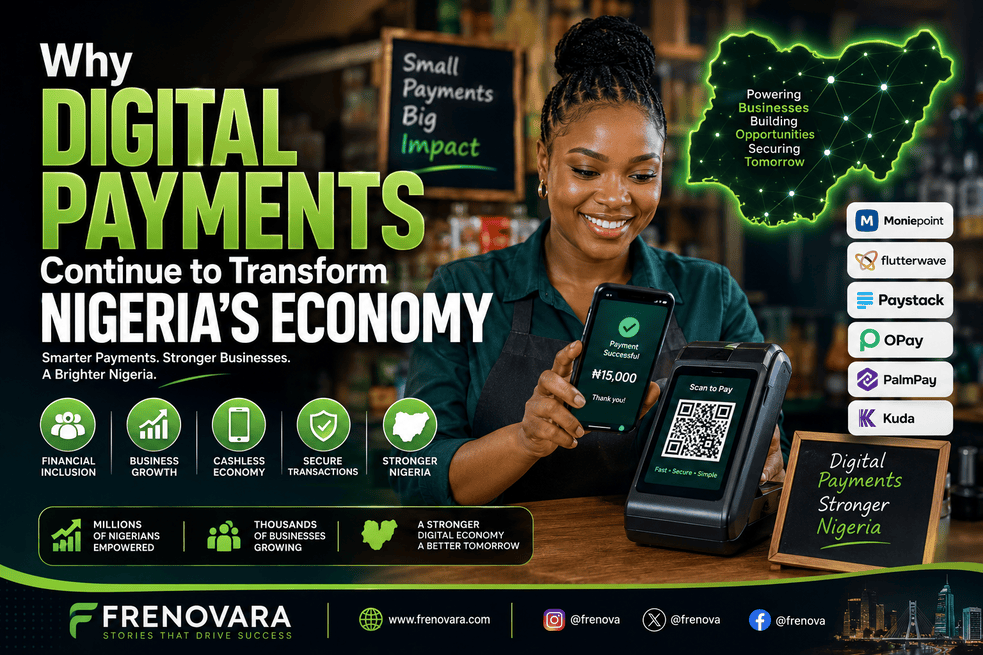
Why Digital Payments Continue to Transform Nigeria’s Economy
Nigeria’s economy is undergoing one of the biggest financial transformations in its history.
Only a decade ago, cash dominated nearly every aspect of commercial activity.
Today, millions of Nigerians complete transactions without touching physical currency.
Whether buying groceries, paying school fees, receiving salaries, purchasing online, or transferring money to family members, digital payments have become part of everyday life.
This transformation is being driven by a combination of technological innovation, smartphone adoption, fintech companies, government policies, and changing consumer behavior.
Digital payments are no longer simply convenient.
They have become one of the engines powering Nigeria’s modern economy.
Five Fast-Growing African Startups Investors Are Watching in 2026
Nigeria’s Journey Toward a Cashless Economy
For decades, Nigeria operated primarily as a cash-based economy.
Businesses relied heavily on physical currency.
Consumers often travelled long distances to make payments or withdraw money.
Banking services remained inaccessible for millions of people, particularly in rural communities.
As internet connectivity improved and smartphones became more affordable, financial technology companies began introducing new ways to move money quickly and securely.
This shift accelerated dramatically over the last decade.
Today, digital payments are available through:
- Mobile banking applications.
- Internet banking.
- Point-of-Sale (POS) terminals.
- QR code payments.
- USSD banking.
- Digital wallets.
- Online payment gateways.
The result has been greater convenience for consumers and increased efficiency for businesses.
How Africa’s Robotics Industry Is Building the Factories of the Future
The Rise of Fintech Companies
Much of Nigeria’s digital payment revolution has been driven by innovative fintech companies.
Organizations such as:
- Moniepoint.
- Flutterwave.
- Paystack.
- OPay.
- PalmPay.
- Kuda.
have transformed how individuals and businesses access financial services.
How Africa’s Drone Industry Is Creating the Next Billion-Dollar Economy
Rather than replacing traditional banks, these companies have expanded access to financial products by providing:
- Faster payments.
- Lower transaction costs.
- Improved customer experience.
- Better financial accessibility.
Their success has positioned Nigeria as Africa’s leading fintech hub.
Financial Inclusion Is Expanding
One of digital payments’ greatest achievements has been improving financial inclusion.
Millions of Nigerians who previously lacked access to formal banking services can now:
- Open digital accounts.
- Receive payments.
- Save money.
- Transfer funds.
- Pay bills.
- Access loans.
Agent banking has played a particularly important role.
How Africa’s Space Industry Is Becoming a Multi-Billion-Dollar Opportunity
Across urban and rural communities, POS agents provide banking services where traditional bank branches may not exist.
This has reduced financial barriers while encouraging participation in the formal economy.
Benefits for Small Businesses
Small and medium-sized enterprises (SMEs) form the backbone of Nigeria’s economy.
Digital payment systems have significantly improved how these businesses operate.
Benefits include:
- Faster customer payments.
- Improved record keeping.
- Reduced cash handling risks.
- Better financial management.
- Increased sales opportunities.
- Easier access to business financing.
By accepting digital payments, businesses can serve customers more efficiently while improving operational transparency.
Consumer Behaviour Is Changing
Modern Nigerian consumers increasingly expect fast, secure, and convenient payment options.
Many people now prefer using:
- Mobile apps.
- Debit cards.
- QR payments.
- Bank transfers.
- Digital wallets.
This shift has encouraged businesses to modernize their payment infrastructure.
Companies unable to accept digital payments risk losing customers to more technologically advanced competitors.
How African SMEs Are Using AI to Compete with Global Businesses
The Economic Impact of Digital Payments
Digital payments are doing far more than making everyday transactions convenient.
They are contributing directly to Nigeria’s economic development.
As more transactions move through formal financial channels, businesses and governments gain access to better financial data, increased transparency, and improved efficiency.
Several areas have benefited significantly.
How Artificial Intelligence Is Transforming Healthcare in Africa and Saving Millions of Lives
Business Growth
Businesses can now:
- Receive payments instantly.
- Serve customers nationwide.
- Reduce cash handling costs.
- Improve financial reporting.
- Build transaction histories that support loan applications.
This enables even small enterprises to operate more professionally and compete in larger markets.
Why Africa’s Digital Banks Are Winning the Future of Finance
Increased Tax Efficiency
Digital transactions create verifiable financial records.
This helps improve:
- Tax compliance.
- Business accountability.
- Government revenue collection.
As more businesses adopt digital payments, the formal economy continues expanding.
Job Creation
Nigeria’s fintech revolution has generated thousands of jobs.
Employment opportunities have increased in:
- Software engineering.
- Cybersecurity.
- Customer support.
- Sales.
- Product management.
- Data science.
- Agent banking.
- Digital marketing.
Indirectly, millions of POS agents have also created self-employment opportunities across the country.
Government Policies Supporting Digital Payments
The Nigerian government and the Central Bank of Nigeria (CBN) have introduced several initiatives aimed at encouraging electronic payments.
How African Startups Are Attracting Billions in Global Investment
These include:
- Cashless policy initiatives.
- Financial inclusion strategies.
- Payment infrastructure improvements.
- Digital banking regulations.
- Agency banking frameworks.
The objective has been to reduce dependence on physical cash while encouraging secure digital financial services.
Although implementation has faced challenges, these policies have accelerated the adoption of electronic payments nationwide.
Challenges Facing Nigeria’s Digital Payment Ecosystem
Despite remarkable progress, important challenges remain.
Network Reliability
Many users occasionally experience:
- Failed transfers.
- Delayed transactions.
- Network interruptions.
Improving telecommunications infrastructure remains essential.
Fraud and Cybercrime
As digital payments increase, cybercriminals continue developing more sophisticated attacks.
Common threats include:
- Phishing.
- Identity theft.
- SIM swap fraud.
- Fake payment alerts.
- Social engineering.
Financial institutions continue investing heavily in cybersecurity to protect users.
Digital Literacy
Not every Nigerian fully understands digital financial services.
Increasing financial education remains important to ensure users can safely benefit from new technologies.
The Creator Economy in Africa: How Young Africans Are Building Million-Dollar Brands Online
Rural Connectivity
Internet coverage continues improving but remains inconsistent in some rural communities.
Expanding broadband access will further accelerate financial inclusion.
Artificial Intelligence Is Improving Digital Payments
Artificial Intelligence is becoming increasingly important within Nigeria’s financial sector.
Banks and fintech companies now use AI to:
- Detect fraud.
- Monitor suspicious transactions.
- Improve customer support.
- Assess credit risk.
- Personalize financial recommendations.
- Automate compliance processes.
These technologies improve efficiency while strengthening security.
As AI capabilities continue advancing, digital financial services are expected to become even faster, safer, and more personalized.
Why Investors Remain Optimistic
Nigeria’s digital payment industry continues attracting both local and international investors.
Several factors explain this optimism.
These include:
- Africa’s largest population.
- Rapid smartphone adoption.
- Growing internet usage.
- Expanding middle class.
- Rising digital commerce.
- Increasing financial inclusion.
Together, these trends create enormous long-term opportunities for fintech companies.
Many analysts believe Nigeria will remain Africa’s largest digital payments market for years to come.
The Future of Digital Payments in Nigeria
Nigeria’s digital payment ecosystem is still evolving.
While remarkable progress has already been made, the next decade promises even greater innovation.
Several trends are expected to shape the future.
The Rise of Smart Cities in Africa: How Technology Is Redefining Urban Living
Artificial Intelligence
AI will increasingly power:
- Fraud detection.
- Customer service chatbots.
- Credit scoring.
- Personalized financial products.
- Risk management.
- Automated compliance.
This will make digital payments faster, safer, and more intelligent.
Open Banking
Open Banking is expected to encourage greater collaboration between banks and fintech companies.
Consumers will benefit from:
- Better financial products.
- Easier account integration.
- Improved payment experiences.
- Increased competition.
Cross-Border Payments
As intra-African trade expands under the African Continental Free Trade Area (AfCFTA), businesses will require more efficient cross-border payment systems.
Fintech companies are likely to play a central role in simplifying international transactions across Africa.
Cashless Communities
Physical cash will continue to exist, but its importance is likely to decline as digital payments become more widely accepted.
Markets, transportation, healthcare, education, and government services are all expected to increase digital payment adoption.
How 5G Will Transform African Businesses: The Next Digital Revolution
Five Lessons Businesses Can Learn
Nigeria’s digital payment revolution offers valuable lessons for entrepreneurs.
1. Embrace Technology Early
Businesses that adopted digital payments early gained competitive advantages.
Innovation often rewards early adopters.
2. Customer Convenience Drives Growth
Consumers consistently choose businesses that make transactions simple and convenient.
Reducing payment friction improves customer satisfaction.
3. Build Trust
Secure transactions, reliable systems, and responsive customer support remain essential.
Trust remains one of the most valuable business assets.
4. Data Creates Opportunities
Digital payments generate valuable business insights.
Transaction histories help companies:
- Understand customers.
- Improve inventory.
- Predict demand.
- Access financing.
5. Adapt Continuously
Technology changes rapidly.
Businesses that continuously improve their payment systems remain more competitive than those resistant to change.
Africa 2030: The Technologies That Will Create the Continent’s Next Billion-Dollar Companies
Frequently Asked Questions (FAQs)
What Are Digital Payments?
Digital payments involve transferring money electronically rather than using physical cash.
Examples include:
- Bank transfers.
- Mobile banking.
- POS payments.
- QR payments.
- Online payments.
- Digital wallets.
Why Are Digital Payments Important?
They improve:
- Convenience.
- Financial inclusion.
- Business efficiency.
- Transparency.
- Economic growth.
Which Companies Lead Nigeria’s Digital Payment Industry?
Some of the leading companies include:
These organizations continue driving innovation within Nigeria’s fintech ecosystem.
Are Digital Payments Safe?
When users follow good cybersecurity practices, digital payments are generally secure.
Recommended safety measures include:
- Strong passwords.
- Two-factor authentication.
- Verifying payment details.
- Avoiding suspicious links.
- Keeping banking apps updated.
Will Nigeria Become Completely Cashless?
While physical cash will likely remain part of the economy, digital transactions are expected to continue growing rapidly.
A hybrid financial system will probably exist for many years.
How Mobile Money Is Powering African E-commerce in 2026
Nigeria’s Digital Economy Is Just Getting Started
Nigeria has become one of Africa’s leading digital economies.
Fintech innovation continues attracting international investment while creating opportunities for businesses and consumers alike.
As internet penetration increases, smartphone adoption grows, and financial technology becomes more sophisticated, digital payments will likely become even more central to Nigeria’s economic development.
Businesses that embrace this transformation will be better positioned for future success.
Beyond the Headlines
Nigeria’s digital payment revolution is about far more than replacing cash.
It represents a broader shift toward a more connected, inclusive, and technology-driven economy.
Fintech companies have shown that innovation can solve long-standing financial challenges while creating new opportunities for millions of people.
The journey is still unfolding.
Artificial intelligence, open banking, digital identity, embedded finance, and cross-border payment solutions will shape the next chapter of Nigeria’s financial evolution.
For entrepreneurs, investors, policymakers, and consumers, digital payments are no longer simply a convenience—they have become essential infrastructure for economic growth.
At Frenovara, we believe Africa’s digital transformation is one of the continent’s greatest economic opportunities. Nigeria’s payment revolution demonstrates how innovation, entrepreneurship, and technology can unlock prosperity for millions.