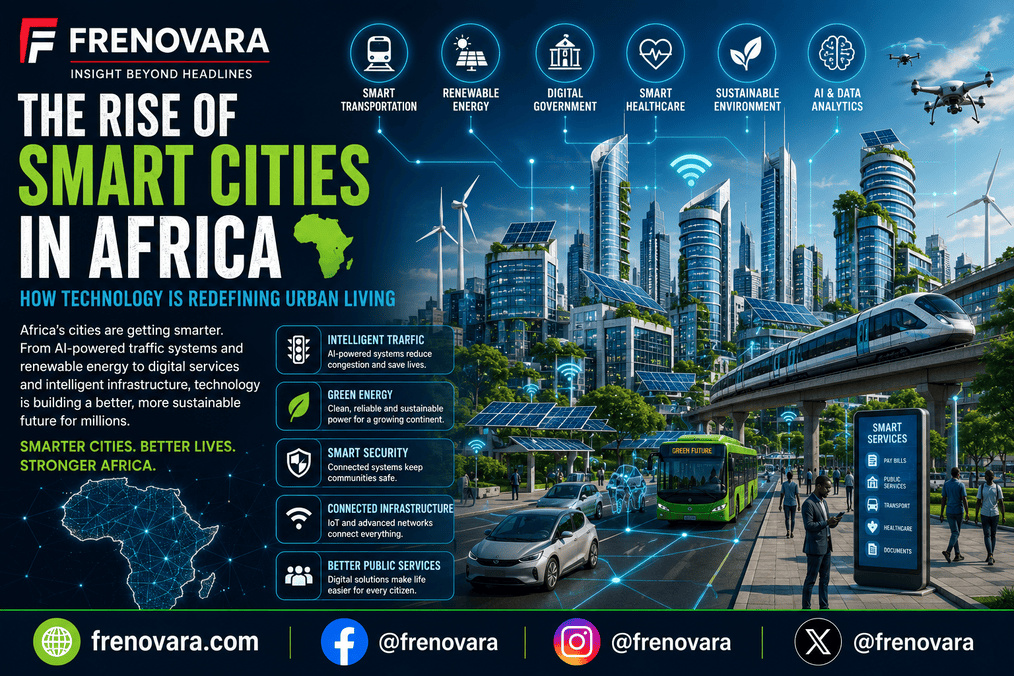
The Rise of Smart Cities in Africa: How Technology Is Redefining Urban Living
Africa is urbanising at an extraordinary pace.
Every year, millions of people move from rural communities into cities searching for better jobs, education, healthcare, and business opportunities.
By 2050, experts estimate that more than half of Africa’s population will live in urban areas.
This rapid growth presents enormous opportunities—but also serious challenges.
Cities must now accommodate growing populations while managing traffic congestion, housing shortages, waste management, public safety, healthcare, and environmental sustainability.
Traditional urban planning alone cannot solve these problems.
This is where Smart Cities Africa enters the conversation.
Smart cities combine technology, artificial intelligence, data analytics, renewable energy, and digital infrastructure to improve how cities function and how people live.
Rather than reacting to problems after they occur, smart cities use technology to predict, monitor, and solve challenges in real time.
Across the continent, governments, private companies, and technology startups are already investing heavily in building the African Smart Cities of the future.
What Is a Smart City?
A smart city uses digital technology to improve everyday life.
Instead of relying entirely on manual systems, cities use connected technologies to manage essential services more efficiently.
Examples include:
- Smart traffic management.
- Intelligent street lighting.
- Digital healthcare systems.
- Smart waste collection.
- AI-powered security monitoring.
- Renewable energy integration.
- Connected public transportation.
The goal is simple:
Improve quality of life while reducing costs and protecting the environment.
Why Africa Needs Smart Cities
Urban populations across Africa continue growing rapidly.
Without innovation, many cities face increasing pressure on:
- Roads.
- Electricity.
- Water supply.
- Public transportation.
- Housing.
- Healthcare.
- Waste management.
Technology offers solutions that traditional infrastructure alone cannot provide.
Investing in Digital Infrastructure Africa will allow governments to build cities capable of supporting future generations.
Artificial Intelligence Is Powering Urban Innovation
Artificial Intelligence sits at the heart of modern smart cities.
AI systems can analyse enormous amounts of information in real time.
This allows cities to:
- Predict traffic congestion.
- Monitor energy consumption.
- Improve emergency response.
- Detect security threats.
- Optimise public transportation.
- Reduce operational costs.
As Artificial Intelligence Africa continues advancing, urban management will become increasingly intelligent.
Smart Transportation Will Reduce Congestion
Traffic congestion costs African economies billions of dollars annually.
Smart transportation systems can help solve this challenge.
Technologies include:
- AI-controlled traffic lights.
- Smart parking systems.
- Real-time public transport tracking.
- Intelligent route optimisation.
- Connected electric buses.
- Digital ticketing systems.
These innovations reduce travel time while improving fuel efficiency and lowering emissions.
Renewable Energy Will Power Future Cities
Many African cities continue facing electricity shortages.
Smart cities increasingly integrate renewable energy sources such as:
- Solar power.
- Wind energy.
- Battery storage.
- Smart electricity grids.
These systems improve energy reliability while reducing dependence on fossil fuels.
Sustainable energy will become one of the defining features of Future Cities Africa.
African Innovation Is Leading the Way
Several African countries are already demonstrating what smart urban development can achieve.
Projects across Rwanda, Kenya, South Africa, Egypt, Nigeria, and Morocco continue showcasing how technology can improve urban life.
As African Innovation accelerates, more cities are expected to adopt intelligent digital systems over the coming decade.
Smart Healthcare Is Transforming African Cities
Healthcare is one of the sectors benefiting most from Smart Technology Africa.
As urban populations continue growing, hospitals face increasing pressure to serve more patients while maintaining quality care.
Smart city technologies are helping healthcare providers improve efficiency through:
- Electronic health records.
- AI-assisted diagnostics.
- Smart ambulance dispatch systems.
- Telemedicine.
- Remote patient monitoring.
- Digital pharmacy management.
With high-speed internet and Artificial Intelligence working together, doctors can diagnose illnesses faster, monitor patients remotely, and deliver better healthcare services to underserved communities.
For rapidly expanding cities, this represents a major leap forward in Urban Development Africa.
Digital Government Services Are Improving Everyday Life
One defining feature of African Smart Cities is the digitization of public services.
Instead of standing in long queues, citizens increasingly access government services online.
Examples include:
- Business registration.
- Tax payments.
- Driver’s license renewals.
- Land registration.
- Utility bill payments.
- National identity verification.
Digital public services reduce bureaucracy, increase transparency, and improve public trust.
Governments also save significant operational costs through automation.
Smart Security Systems Are Making Cities Safer
Security remains a major concern for many urban centers.
Modern smart cities increasingly rely on intelligent surveillance systems powered by Artificial Intelligence.
These technologies include:
- Smart CCTV cameras.
- Facial recognition (where legally permitted).
- Intelligent traffic monitoring.
- Emergency response systems.
- AI-powered crime analytics.
- Connected disaster alert systems.
Rather than responding after crimes occur, AI enables authorities to identify suspicious patterns and improve public safety.
This is becoming an important aspect of Future Cities Africa.
The Internet of Things (IoT) Is Connecting Everything
Another major driver of Smart Cities Africa is the Internet of Things (IoT).
IoT refers to physical devices connected through the internet that continuously collect and exchange information.
Examples include:
- Smart electricity meters.
- Water monitoring systems.
- Air quality sensors.
- Connected traffic lights.
- Smart waste bins.
- Parking sensors.
Together, these connected systems allow city managers to make better decisions using real-time data instead of assumptions.
Green Buildings Will Shape Sustainable Cities
Modern cities must grow responsibly.
Smart buildings reduce energy consumption while improving comfort for occupants.
Features include:
- Solar-powered rooftops.
- Automated lighting.
- Smart air conditioning.
- Energy-efficient construction.
- Water recycling systems.
- Intelligent building management software.
These innovations support Sustainable Cities Africa while lowering operating costs for businesses and governments.
Which African Countries Are Leading Smart City Development?
Several countries are already investing heavily in smart city initiatives.
Rwanda
Rwanda has become one of Africa’s leading innovators in digital governance and urban planning.
Its investments in smart infrastructure continue attracting international recognition.
Kenya
Kenya continues strengthening its reputation through digital innovation, fintech, smart transportation, and intelligent public services.
Nigeria
Nigeria’s major commercial cities, particularly Lagos, continue introducing digital infrastructure projects designed to improve transportation, payments, public services, and business operations.
As Africa’s largest economy, Nigeria remains central to African Innovation.
Egypt
Egypt has invested significantly in new urban developments incorporating advanced digital technologies, intelligent infrastructure, and sustainable planning.
South Africa
South Africa continues adopting smart technologies across transportation, utilities, healthcare, and telecommunications.
Its advanced infrastructure positions it among Africa’s leaders in smart city development.
Investors Are Watching Smart City Innovation Closely
Building smart cities requires enormous investment.
This creates opportunities across numerous industries.
High-growth sectors include:
- Telecommunications.
- Artificial Intelligence.
- Cloud computing.
- Renewable energy.
- Cybersecurity.
- Construction technology.
- Urban mobility.
- Data analytics.
- Internet of Things.
- Smart infrastructure.
These industries represent some of the strongest African Business Opportunities heading toward 2030.
Challenges Facing Smart Cities in Africa
Despite enormous progress, challenges remain.
These include:
- Funding limitations.
- Reliable electricity.
- Affordable internet access.
- Cybersecurity risks.
- Digital literacy.
- Data privacy regulations.
- Rapid population growth.
Addressing these challenges will determine how quickly Digital Infrastructure Africa continues evolving.
Fortunately, governments, technology companies, and international investors are increasingly collaborating to solve these issues.
Africa 2030 – The Smart City Revolution Is Only Beginning
By 2030, Africa’s urban landscape could look dramatically different from what we know today.
Instead of cities struggling with congestion, inefficient public services, and unreliable infrastructure, many urban centres are expected to operate as intelligent ecosystems where technology works quietly in the background to improve daily life.
Imagine a future where:
- Traffic lights automatically adjust to traffic flow using Artificial Intelligence.
- Emergency services reach accident scenes faster through real-time digital mapping.
- Smart electricity grids reduce blackouts.
- Autonomous public transport improves mobility.
- Buildings consume less energy through intelligent automation.
- Citizens access nearly every government service digitally.
This is no longer an ambitious dream.
Across the continent, governments and private investors are laying the foundations for Future Cities Africa.
Which Industries Will Benefit the Most?
The rise of Smart Cities Africa will create enormous economic opportunities across multiple industries.
Artificial Intelligence
As cities generate more digital data, AI companies will become increasingly valuable.
Artificial Intelligence will support:
- Urban planning.
- Healthcare.
- Public safety.
- Transportation.
- Energy management.
This positions Artificial Intelligence Africa among the continent’s highest-growth sectors.
Telecommunications
Telecommunication companies will continue investing heavily in:
- 5G expansion.
- Fibre-optic infrastructure.
- Cloud services.
- Data centres.
Reliable connectivity remains the backbone of every smart city.
Renewable Energy
Smart cities require clean, reliable energy.
This creates opportunities for businesses operating in:
- Solar energy.
- Battery storage.
- Smart grids.
- Electric mobility.
- Sustainable construction.
Renewable energy will become one of the pillars of Sustainable Cities Africa.
Cybersecurity
As more public services move online, protecting digital infrastructure becomes increasingly important.
Cybersecurity firms will play a vital role in safeguarding:
- Government databases.
- Financial systems.
- Healthcare records.
- Smart transportation networks.
- Critical infrastructure.
Construction Technology
The future of construction is becoming increasingly digital.
Developers now integrate:
- Smart sensors.
- Building automation.
- AI-assisted planning.
- Energy-efficient materials.
- Digital twins.
These innovations reduce costs while improving long-term sustainability.
Frequently Asked Questions (FAQs)
What Is a Smart City?
A smart city uses advanced technology, data, and connected infrastructure to improve how public services operate while enhancing residents’ quality of life.
Why Are Smart Cities Important for Africa?
Rapid urbanisation means African cities must serve millions of additional residents over the coming decades.
Smart technologies help governments manage growth more efficiently while reducing operational costs.
Which Countries Are Leading Smart Cities in Africa?
Several countries continue investing heavily in African Smart Cities, including:
- Rwanda
- Kenya
- Nigeria
- South Africa
- Egypt
- Morocco
Each is pursuing different approaches to digital infrastructure and urban innovation.
Will Smart Cities Create Jobs?
Yes.
The growth of Digital Infrastructure Africa will increase demand for professionals in:
- Software engineering.
- Artificial Intelligence.
- Telecommunications.
- Construction technology.
- Renewable energy.
- Cybersecurity.
- Data science.
- Smart infrastructure management.
While automation may replace certain repetitive tasks, it will also create entirely new industries and career opportunities.
Why Businesses Should Prepare Today
The companies that wait until smart cities become fully established may find themselves competing against businesses that have already adapted.
Forward-thinking organisations are already investing in:
- Cloud computing.
- Artificial Intelligence.
- Digital customer experiences.
- Data analytics.
- Smart logistics.
- Automation.
Preparing early allows businesses to remain competitive as African Technology Trends continue evolving.
Beyond the Headlines
Throughout history, cities have always reflected the technologies of their time.
Industrial cities were built around factories.
Modern cities were built around highways and electricity.
Tomorrow’s African cities will be built around intelligence.
The true promise of Smart Cities Africa is not the technology itself.
It is the opportunity to solve problems that have limited economic growth for decades.
Smarter transportation means more productive businesses.
Smarter healthcare means healthier communities.
Smarter energy systems mean stronger industries.
Smarter education creates a workforce ready for the global digital economy.
The cities that succeed will not necessarily be the biggest.
They will be the ones that embrace innovation while placing people at the centre of development.
Africa’s urban future is already being designed today.
The decisions governments, businesses, entrepreneurs, engineers, and investors make over the next few years will determine whether African cities simply grow larger—or become truly smarter.
For those paying attention, one thing is becoming increasingly clear:
The next generation of African economic growth will not be driven only by natural resources. It will be powered by intelligent infrastructure, connected communities, and bold innovation.
That’s the Frenovara perspective—looking beyond the headlines to understand the forces shaping Africa’s future.
WordPress Categories
- Technology
- Innovation
- Artificial Intelligence
- Business
- Urban Development
- Digital Economy
WordPress Tags
Smart Cities Africa, African Smart Cities, Urban Development Africa, Future Cities Africa, Digital Infrastructure Africa, Smart Technology Africa, Artificial Intelligence Africa, Sustainable Cities Africa, African Innovation, Africa 2030, Smart Infrastructure, African Business Opportunities
- Africa 2030: The Technologies That Will Create the Continent’s Next Billion-Dollar Companies
- How 5G Will Transform African Businesses
- How AI Is Changing African Businesses
- How Mobile Money Is Powering African E-commerce
- Top African AI Startups Revolutionizing Retail
- The Future of E-commerce in Africa
- How Logistics Technology Is Changing African Retail
- Top Retail Technology Companies in Africa
Image SEO
Image File Name
smart-cities-africa-future-urban-development.jpg
Image Alt Text