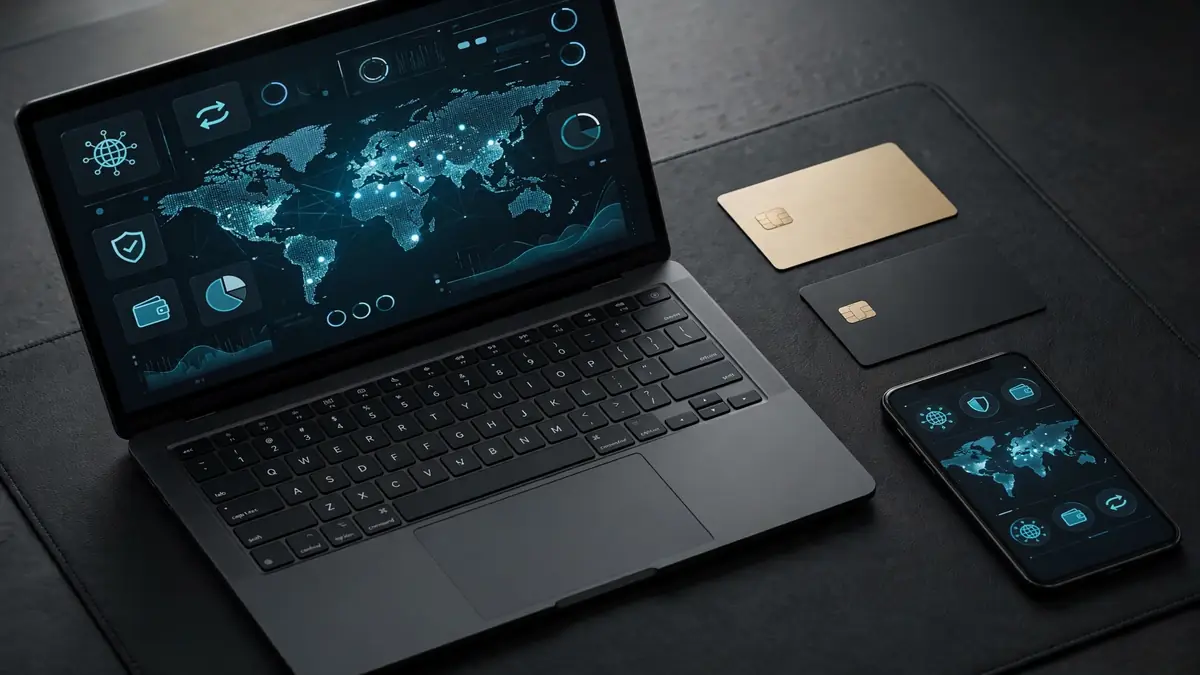
Top 7 B2B Digital Wallet Platforms for Cross-Border Merchant Payments in 2026
FRENOVARA
Beyond The Headline
The top 7 B2B digital wallet platforms allow for cross-border merchant payments in 2026, allowing businesses to receive, hold, convert, and send money across currencies and payment networks without relying entirely on traditional bank accounts.
For decades, cross-border merchant payments depended heavily on correspondent banks, wire transfers, and complicated local banking arrangements. Today, digital wallet platforms are turning cross-border payments into a technology problem that businesses can increasingly manage through one platform.
Cross-border commerce is becoming more connected, but businesses still face foreign exchange costs, settlement delays, local payment preferences, compliance requirements, and fragmented banking infrastructure.
This article examines seven B2B digital wallet and payment platforms worth watching in 2026, focusing on merchant collections, multi-currency balances, local payment methods, international transfers, and payouts.
B2B Digital Wallets Are Becoming Global Payment Operating Systems
The modern business wallet is no longer simply a place to store digital money.
It can connect collections, currency conversion, payouts, virtual accounts, payment methods, corporate spending, reconciliation, and financial APIs in one environment.
That matters because a merchant selling across borders may receive dollars from one customer, euros from another, pounds from a third, and local-currency payments from customers in emerging markets.
The challenge isn’t simply receiving the money.
The real challenge is moving that money through the business efficiently after the customer has paid.
The Cross-Border Payment Value Chain
A simple way to understand these platforms is:
- Collect
- Hold
- Convert
- Reconcile
- Pay out
The strongest platforms don’t necessarily perform every step in exactly the same way, but they increasingly connect several parts of this value chain.
Related Read
What Is a Digital Wallet? How It Works and Why Millions Use It
This connects directly with Frenovara’s wider digital-wallet coverage, where we examined how wallets work and why consumers and businesses increasingly use them.
1. Airwallex Connects Multi-Currency Wallets With Global Business Operations
Airwallex is one of the strongest choices for businesses that want a broader financial operating system rather than a simple payment account.
Its business accounts provide local currency accounts in more than 20 currencies, while its international transfer infrastructure supports transfers to more than 150 countries on its global business account offering.
This makes the platform particularly interesting for e-commerce companies, software businesses, marketplaces, agencies, and other companies operating across several markets.
Airwallex says funds received through its Global Accounts become visible in its multi-currency wallet, where businesses can convert, spend, or transfer those funds.
The key advantage is the connection between the wallet and the rest of the company’s financial operations.
What Airwallex Is Best For
- Global e-commerce companies
- SaaS businesses
- International agencies
- Marketplaces
- Companies managing several currencies
- Businesses that need corporate spending tools alongside payments
Winner: Global Business Operations
Airwallex is a strong choice when cross-border payments need to connect with broader treasury and business-spending functions.
2. Wise Business Makes International Money Movement Easier to Understand
Wise Business focuses heavily on making international money movement more transparent.
Its business account allows eligible businesses to receive money in multiple currencies, hold balances, and convert currencies through its platform.
For merchants, one of Wise’s biggest attractions is the ability to receive certain currencies using local account details and then convert or spend those balances.
That can be useful for an online business receiving payments from customers, marketplaces, clients, or international partners.
Wise also provides integrations with accounting platforms, helping businesses connect international payments with their financial operations.
Its appeal comes from making international business payments feel closer to domestic banking.
What Wise Business Is Best For
- International service businesses
- Freelancers and agencies
- E-commerce sellers
- Companies receiving payments in multiple currencies
- Businesses that prioritize transparent foreign exchange
- Smaller companies expanding internationally
Winner: Simplicity for International Payments
Wise Business stands out for businesses that want straightforward multi-currency receiving, holding, conversion, and payments.
3. Payoneer Gives Global Merchants a Multi-Currency Business Account
Payoneer has built a significant business around helping companies and marketplace sellers receive and move international payments.
Its multi-currency account provides local receiving accounts for several major currencies, while businesses can withdraw funds to bank accounts in many countries.
This makes Payoneer particularly relevant to businesses selling through international marketplaces.
The platform also connects with major marketplaces and freelance platforms, allowing users to consolidate international earnings.
For businesses receiving international income, the ability to manage funds through one account can simplify financial management.
Payoneer’s strength is its connection between global commerce platforms and business payment accounts.
What Payoneer Is Best For
- Marketplace sellers
- E-commerce businesses
- Digital service providers
- Freelancers and agencies
- Businesses receiving international earnings
- Companies paying suppliers and contractors
Winner: Marketplace Businesses
Payoneer is particularly attractive when a business earns money through multiple international marketplaces and platforms.
Related Read
Top 10 Digital Wallets in the World (2026)
That article provides broader context on major wallet platforms and how the digital-wallet category is evolving.
4. Nium Focuses on Global Payouts and Business Money Movement
Nium approaches cross-border payments from the infrastructure side.
Its platform supports global payouts to numerous countries, including payments to bank accounts, cards, and digital wallets.
That makes Nium particularly relevant to companies that don’t simply need to receive merchant payments but also need to send money to customers, sellers, workers, suppliers, or partners around the world.
This is especially important for marketplaces.
A marketplace may collect money from buyers and then need to distribute proceeds to sellers in several countries.
Nium’s infrastructure is designed around that kind of movement.
What Nium Is Best For
- Marketplaces
- Global platforms
- Gig-economy businesses
- International payouts
- Companies paying sellers and partners
- Businesses that need multiple payout channels
Winner: Global Payouts
Nium is particularly strong when the difficult part of cross-border commerce is getting money to recipients quickly and through their preferred payment channel.
5. Rapyd Combines Wallets, Payments, Payouts and Local Payment Methods
Rapyd is one of the platforms on this list that most directly fits the digital-wallet infrastructure model.
Its wallet infrastructure allows businesses to support payments, payouts, cards, stored funds, multiple currencies, and wallet-to-wallet transfers.
Rapyd also provides local and cross-border payouts through bank transfers, eWallets, cards, and other payment methods.
That breadth makes Rapyd particularly interesting for companies building their own financial products.
What Rapyd Is Best For
- Fintech companies
- Marketplaces
- Global SaaS platforms
- Businesses building embedded finance
- Companies requiring wallet infrastructure
- Platforms managing users and sub-wallets
Winner: Embedded Wallet Infrastructure
Rapyd stands out for businesses that want to build wallet functionality into their own products rather than simply use a conventional business account.
6. dLocal Connects Global Merchants to Emerging-Market Payment Methods
dLocal takes a different approach from platforms focused primarily on multi-currency business accounts.
Its strength is local payment infrastructure in emerging markets.
The platform connects global merchants with local payment methods, including cards, bank transfers, eWallets, mobile money, and other alternative payment methods.
This is particularly important for companies expanding into Africa, Latin America, Asia, and other markets where international cards aren’t always the preferred payment method.
For a merchant, accepting a customer in another country isn’t simply about accepting another currency.
The merchant also needs to accept the payment method that customers actually use.
dLocal’s model addresses that problem by connecting global businesses to local payment infrastructure.
What dLocal Is Best For
- Global e-commerce companies
- Marketplaces entering emerging markets
- Digital services
- International merchants
- Companies expanding into Africa
- Businesses targeting Latin America and Asia
Winner: Emerging-Market Expansion
dLocal is particularly compelling for merchants whose international growth strategy depends on local payment methods rather than cards alone.
Related Read
How Fintech Is Powering Online Shopping
How Google Pay Became a Global Digital Wallet and Changed Digital Payments Forever
Frenovara’s fintech coverage explains why payment infrastructure has become one of the most important parts of modern e-commerce.
7. Flutterwave Bridges Global Commerce With African Payment Infrastructure
Flutterwave is particularly relevant to Frenovara because of its role in connecting businesses with African markets.
Its infrastructure supports collections and payouts, while its payment products allow eligible merchants to receive payments through supported African payment channels.
Flutterwave has also positioned its infrastructure as a bridge for global companies entering Africa.
For businesses targeting Nigeria and other African markets, this local infrastructure can be more valuable than simply having access to another international payment account.
Local payment compatibility can determine how easily a global merchant enters a new market.
What Flutterwave Is Best For
- Businesses entering Africa
- African e-commerce
- International merchants
- Marketplaces
- Digital businesses
- Companies collecting payments across African markets
Winner: Africa Expansion
Flutterwave is one of the strongest options for businesses that need local African payment infrastructure as part of a wider international strategy.
Flutterwave Products and Their Key Features Explained
The Seven Platforms Solve Different Problems
There isn’t one universal winner because B2B cross-border payment requirements differ significantly.
| Platform | Strongest Use Case |
|---|---|
| Airwallex | Global business finance |
| Wise Business | Simple multi-currency payments |
| Payoneer | Marketplace earnings |
| Nium | Global payouts |
| Rapyd | Embedded wallet infrastructure |
| dLocal | Emerging-market payments |
| Flutterwave | African market expansion |
The distinction matters.
A U.S. software company paying contractors around the world may have different needs from a Nigerian merchant selling to customers in Europe.
Likewise, a global marketplace distributing money to thousands of sellers has different requirements from an e-commerce company simply collecting international customer payments.
What This Means For Customers
The rise of B2B digital wallets can make international commerce easier for customers because businesses have more tools for accepting local payment methods.
When merchants can support cards, bank transfers, mobile money, and eWallets across different markets, customers don’t have to change their preferred payment behavior simply because they are buying from a foreign company.
Better payment infrastructure can remove friction from the checkout experience.
This is particularly relevant in markets where mobile money, bank transfers, and digital wallets are more common than international cards.
What This Means For Entrepreneurs
For entrepreneurs, the biggest opportunity may not be creating another digital wallet.
It may be building businesses on top of existing payment infrastructure.
Entrepreneurs can use payment APIs, virtual accounts, wallet infrastructure, local payment rails, and payout networks to build marketplaces, SaaS platforms, financial products, creator platforms, and international commerce businesses.
For Nigerian MSMEs, this could be especially significant because international customers can be reached without building banking relationships in every market.
The payment infrastructure layer is becoming a business opportunity of its own.
The B2B Digital Wallet Framework Every Merchant Should Understand
Before choosing a platform, businesses should evaluate five layers:
- Collections: Can the platform receive money from customers in the markets you serve?
- Wallets: Can you hold balances in the currencies your business needs?
- Conversion: How does the platform handle foreign exchange?
- Payouts: Can you pay suppliers, sellers, employees, contractors, and partners through their preferred channels?
- Reconciliation: Can your finance team easily track and report transactions?
This framework is more useful than simply asking which provider supports the most currencies.
The best platform is the one that fits the complete movement of money through your business.
What Nigerian Businesses Should Consider
For Nigerian businesses, cross-border payments come with additional considerations.
A company may need to receive foreign currency, settle locally, pay international suppliers, manage FX exposure, and comply with local financial requirements.
The ecosystem also includes domestic infrastructure such as CBN-regulated financial institutions, NIBSS payment rails, bank transfers, POS networks, and local fintech platforms such as OPay and PalmPay.
That means Nigerian businesses shouldn’t choose an international wallet platform simply because it advertises a large number of currencies.
Why Digital Payments Continue to Transform Nigeria’s Economy in 2026
They should ask whether it actually supports the markets, settlement methods, compliance requirements, and transaction flows their business needs.
Local payment compatibility can matter more than headline currency coverage.
Related Read
How WooCommerce Powers Millions of Online Businesses
For online merchants using WooCommerce, payment infrastructure can determine how easily a store can accept customers from different countries.
How Entrepreneurs Should Choose a B2B Digital Wallet Platform
Before opening an account or integrating an API, ask:
- Where are my customers located?
- Which currencies do I receive?
- Which currencies do I need to hold?
- How do my customers prefer to pay?
- Where do I need to send payouts?
- Do I need virtual accounts?
- Do I need an API or a ready-made business account?
- How will foreign exchange affect my margins?
- What compliance requirements apply to my business?
- Can the platform integrate with my accounting and commerce systems?
The answers will usually narrow the field quickly.
A marketplace may lean toward Nium or Rapyd.
A company seeking a global business account may prefer Airwallex or Wise Business.
A marketplace seller may find Payoneer more relevant.
A company entering emerging markets may consider dLocal.
A business expanding into Africa may find Flutterwave particularly useful.
A B2B digital wallet is a business-focused financial account or infrastructure layer that can allow companies to receive, hold, convert, and send money electronically, often across multiple currencies and payment networks.
Not always.
Some platforms provide account-like local receiving details, while others provide wallet infrastructure, payment APIs, or a combination of services.
The regulatory structure and available features vary by provider and country
There is no single best platform for every company.
Airwallex, Wise Business, Payoneer, Nium, Rapyd, dLocal, and Flutterwave each focus on different parts of cross-border commerce.
The answer depends on the market and payment flow.
Flutterwave is particularly relevant for businesses that need African payment infrastructure, while dLocal can help global merchants access emerging-market payment methods.
They can, but businesses should compare the complete cost.
That includes transaction fees, foreign-exchange spreads, withdrawal charges, payout fees, account fees, and other applicable costs.
Security depends on the provider, the regulatory framework, account controls, authentication systems, and how the business manages its own credentials and users.
Businesses should review the provider’s regulatory and security information before moving significant funds.
Yes, depending on the platform, a merchant may be able to accept multiple currencies and local payment methods, hold foreign-currency balances, convert funds, and make international payouts.
Conclusion: Cross-Border Commerce Is Becoming a Payments Technology Game
B2B digital wallets are changing how businesses think about international money movement.
The old model often required separate bank accounts, payment processors, local relationships, and manual reconciliation.
The newer model is increasingly built around platforms, APIs, wallets, virtual accounts, local payment rails, and automated settlement.
The biggest opportunity is not simply moving money faster.
It’s connecting every stage of the commercial transaction.
For customers, that can mean easier payments.
For merchants, it can mean access to more markets.
For entrepreneurs, it creates new opportunities to build businesses on financial infrastructure they don’t have to develop from scratch.
For African businesses, the implications could be even bigger as local payment infrastructure connects more closely with global commerce.
The future of cross-border commerce will be shaped by the companies that make global payments feel local.
FRENOVARA — Beyond The Headline