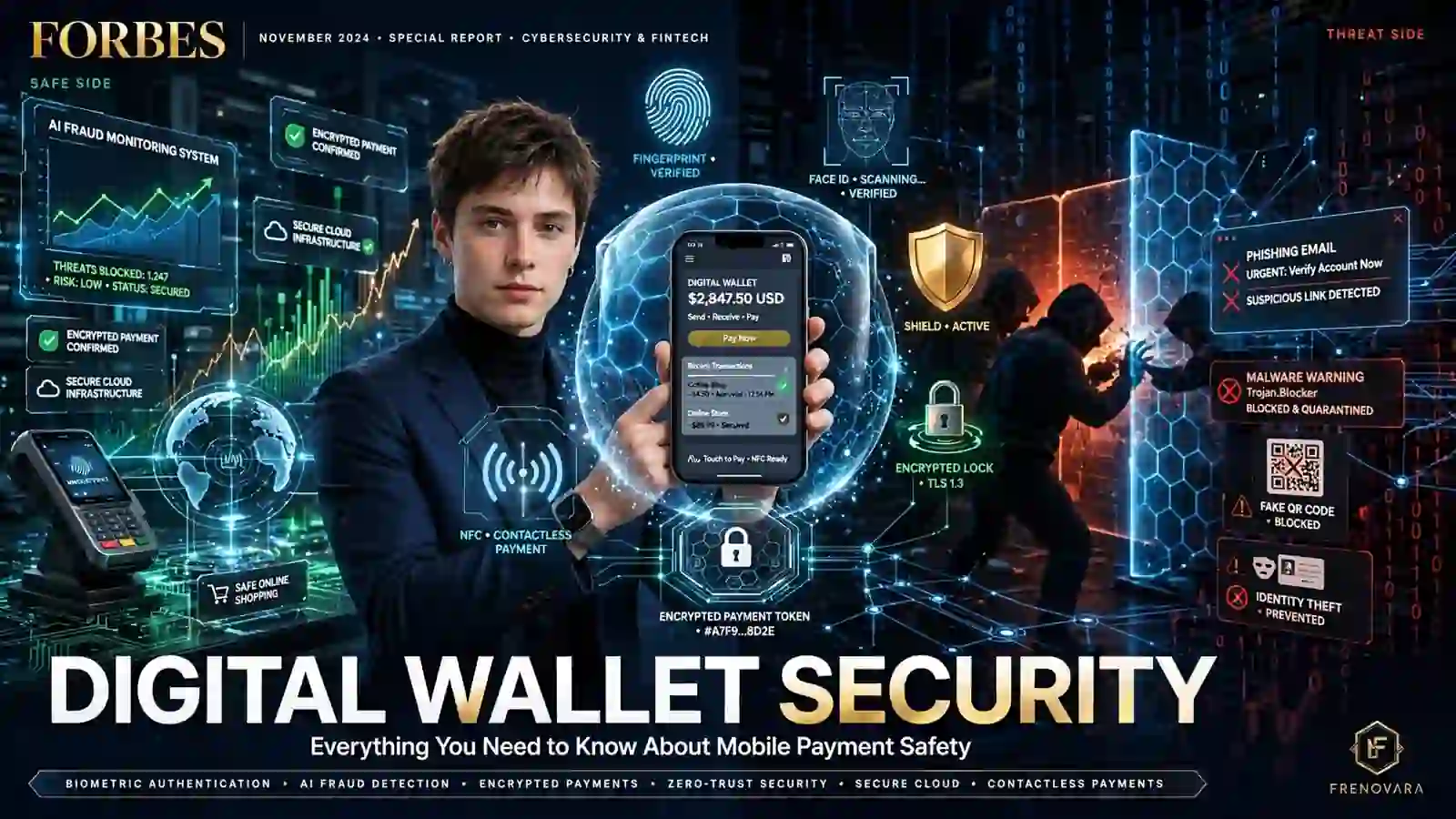
Are Digital Wallets Safe? Everything You Need to Know About Mobile Payment Security

As digital payments continue replacing cash and physical cards, millions of people now rely on smartphones to pay for everything from groceries and transportation to online shopping and utility bills.
Applications such as Apple Pay, Google Wallet, Samsung Wallet, PayPal, PalmPay, OPay, and other digital wallets have transformed modern finance.
But one question continues to concern many consumers:
Are digital wallets actually safe?
After all, storing financial information on a smartphone may sound risky.
What happens if your phone is stolen?
Can hackers access your money?
Can criminals steal your payment information?
The good news is that modern digital wallets are among the most secure payment systems ever developed.
However, like every technology, they are only as safe as the way people use them.
This guide explores everything you need to know about Digital Wallet Security, how mobile payment protection works, the most common risks, and how to keep your money safe.
What Is Digital Wallet Security?
Digital wallet security refers to the technologies and procedures designed to protect users’ financial information during electronic payments.
Unlike traditional payment cards that expose sensitive information during transactions, digital wallets rely on multiple layers of protection.
These include:
- Encryption
- Tokenization
- Biometric authentication
- Device verification
- Fraud detection systems
- Multi-factor authentication
Together, these technologies make unauthorized access extremely difficult.
Why Many Experts Consider Digital Wallets Safer Than Debit Cards
Many people assume plastic debit cards are more secure simply because they are physical.
In reality, physical cards present several risks.
They can be:
- Lost
- Stolen
- Copied
- Skimmed
- Photographed
Digital wallets significantly reduce many of these vulnerabilities.
Instead of exposing your actual card number, they often use encrypted payment credentials.
This makes payment data far less useful to cybercriminals.
Tokenization Protects Your Card Information
One of the most important security technologies used by digital wallets is tokenization.
When you add a debit or credit card to a digital wallet, the application usually replaces your actual card number with a unique digital token.
During payment:
- The merchant never receives your real card number.
- The token is used instead.
- Even if intercepted, the token cannot easily be reused for fraudulent purchases.
Tokenization dramatically reduces payment fraud.
Biometric Authentication Adds Another Layer of Security
Most modern smartphones support biometric verification.
Examples include:
- Fingerprint scanning
- Face recognition
- Iris recognition (on some devices)
Before authorizing payments, digital wallets usually require biometric confirmation.
This means someone cannot simply pick up your phone and begin making purchases.
Even if your phone is stolen, biometric protection significantly limits unauthorized access.
Encryption Keeps Data Private
Encryption converts sensitive financial information into unreadable code.
Only authorized systems possess the keys needed to decode it.
Digital wallets encrypt:
- Payment information
- Personal details
- Authentication data
- Transaction records
Strong encryption makes intercepted information extremely difficult for criminals to exploit.
Secure Device Verification
Many digital wallet providers require device verification before activation.
Examples include:
- Phone verification
- Email verification
- Identity confirmation
- Bank authorization
These procedures help ensure that only legitimate users activate payment services.
Real-Time Fraud Monitoring
Financial technology companies continuously monitor transactions.
How Google Pay Became a Global Digital Wallet and Changed Digital Payments Forever
Advanced fraud detection systems analyze:
- Payment locations
- Transaction amounts
- Spending behaviour
- Device information
- Login activity
Unusual activity may automatically trigger:
- Payment declines
- Identity verification
- Temporary account restrictions
- Fraud alerts
These automated systems operate continuously.
Instant Transaction Notifications
Digital wallets typically notify users immediately whenever a payment occurs.
This allows customers to detect unauthorized transactions quickly.
Early detection greatly improves the chances of preventing larger financial losses.
Remote Device Management
If your smartphone is lost, many platforms allow users to:
- Lock the device remotely.
- Erase stored payment information.
- Disable digital wallet access.
- Locate the phone using tracking services.
These capabilities provide additional peace of mind.
Mobile Operating Systems Receive Frequent Security Updates
Apple, Google, Samsung, and other technology companies regularly release security updates.
These updates fix newly discovered vulnerabilities before criminals can exploit them.
Keeping software updated remains one of the simplest ways to improve digital wallet security.
Public Wi-Fi Requires Caution
Although digital wallets themselves remain highly secure, unsafe internet connections can increase broader cybersecurity risks.
Users should avoid:
- Logging into financial accounts using unsecured public Wi-Fi.
- Downloading unknown applications.
- Clicking suspicious payment links.
Safe browsing habits complement digital wallet security.
Human Error Remains the Biggest Risk
Ironically, the greatest weakness in digital wallet security is often not technology.
It is human behaviour.
Examples include:
- Weak passwords.
- Sharing verification codes.
- Falling for phishing scams.
- Installing fake applications.
- Ignoring security updates.
Cybercriminals frequently target people rather than payment systems themselves.
The Most Common Digital Wallet Scams
Although Digital Wallet Security is stronger than ever, cybercriminals continuously develop new methods to trick users.
Interestingly, most successful attacks do not involve breaking sophisticated encryption.
Instead, they exploit human behaviour.
Some of the most common scams include:
- Phishing messages.
- Fake banking applications.
- Social engineering.
- SIM swap fraud.
- QR code scams.
- Fake customer support.
Understanding these threats is the first step toward staying protected.
Phishing Remains the Biggest Threat
Phishing is one of the oldest and still one of the most effective online scams.
Criminals send fake:
- Emails.
- SMS messages.
- WhatsApp messages.
- Social media messages.
These messages often claim:
- Your wallet has been suspended.
- Your account requires verification.
- A payment failed.
- A refund is waiting.
The goal is simple:
Convince you to reveal your login credentials or verification codes.
Why Kuda Bank Is Winning Millions of Customers
Legitimate financial institutions rarely request sensitive information through unsolicited messages.
Fake Mobile Applications
Cybercriminals sometimes create counterfeit versions of popular financial applications.
These fake apps may closely resemble genuine digital wallets.
Once installed, they may attempt to steal:
- Passwords.
- Banking details.
- Verification codes.
- Personal information.
Users should always download financial applications from trusted app stores and verify the publisher before installation.
Digital Wallet vs Mobile Banking: What’s the Difference and Which One Should You Use?
SIM Swap Fraud
SIM swap fraud has become increasingly common in several countries.
In this attack:
- Criminals obtain personal information.
- They convince a mobile network to transfer your phone number to a new SIM card.
- They receive your verification messages.
- They attempt to access financial accounts.
Using authentication methods beyond SMS—such as biometrics or authentication apps—reduces this risk.
QR Code Scams
QR code payments continue growing rapidly.
Unfortunately, criminals sometimes replace legitimate merchant QR codes with fraudulent versions.
Customers unknowingly transfer money to criminals instead of businesses.
Before completing payments:
- Confirm merchant details.
- Verify payment amounts.
- Avoid scanning suspicious QR codes in public places.
Fake Customer Support
Fraudsters sometimes pretend to represent banks or digital wallet providers.
They may contact victims through:
- Phone calls.
- Social media.
- Messaging applications.
They often request:
- One-time passwords.
- Verification codes.
- PIN numbers.
- Passwords.
Legitimate customer support representatives should never ask for these confidential credentials.
Public Charging Stations Can Create Risks
Public USB charging stations may expose devices to “juice jacking” attacks in certain situations.
Although modern smartphones include stronger protections, experts often recommend:
- Using personal chargers.
- Carrying portable power banks.
- Using power-only charging cables when possible.
Protecting the device also protects the digital wallet.
Strong Passwords Still Matter
Even with biometric authentication, strong passwords remain important.
Good passwords should:
- Be unique.
- Contain multiple character types.
- Avoid predictable information.
- Never be reused across different accounts.
Password managers can simplify secure password management.
Enable Two-Factor Authentication
Two-factor authentication (2FA) provides an additional security layer.
Even if criminals discover your password, they still require another verification method before accessing your account.
Whenever available, enable:
- Authentication applications.
- Biometric verification.
- Device approval.
Multiple security layers significantly reduce unauthorized access.
Keep Your Smartphone Updated
Security updates often contain important vulnerability fixes.
Ignoring software updates may expose devices to known security weaknesses.
Users should regularly update:
- Operating systems.
- Banking applications.
- Digital wallet software.
Current software generally provides the strongest available protection.
Monitor Transactions Frequently
Regular account monitoring helps identify unusual activity early.
Users should review:
- Transaction history.
- Account balances.
- Payment notifications.
- Linked devices.
Early detection often prevents more serious financial losses.
Avoid Sharing Your Device
Even trusted friends or relatives should not routinely use devices containing financial applications.
Keeping your smartphone private reduces accidental or intentional misuse.
Top 10 Digital Wallets in the World (2026)
Financial devices deserve the same level of protection as physical wallets.
Why Digital Wallet Providers Invest Billions in Security
Major technology companies understand that trust drives adoption.
Consequently, they invest heavily in:
- Cybersecurity research.
- Fraud prevention.
- Artificial intelligence monitoring.
- Encryption.
- Secure cloud infrastructure.
- Threat detection systems.
Without strong security, digital wallet adoption would slow significantly.
What Is a Digital Wallet? How It Works and Why Millions Use It in the Digital Economy
Consumer Awareness Is the Strongest Defense
Technology alone cannot eliminate every risk.
Consumers play a vital role by:
- Remaining skeptical of unexpected messages.
- Verifying payment requests.
- Protecting personal information.
- Reporting suspicious activity immediately.
Educated users are much harder to deceive.
Five Habits That Will Keep Your Digital Wallet Secure
Technology companies invest billions of dollars in protecting digital payment systems, but your daily habits also play a major role in keeping your money safe.
Why Digital Wallets May Replace Debit Cards Sooner Than You Think
Here are five simple practices every digital wallet user should adopt.
1. Lock Your Device
Always secure your smartphone with:
- Face recognition
- Fingerprint authentication
- A strong PIN
- A secure password
Never leave your phone unlocked in public places.
2. Only Download Official Apps
Install digital wallet applications exclusively from trusted app stores such as:
- Google Play Store
- Apple App Store
Avoid downloading APK files or unofficial versions from unknown websites, as they may contain malware designed to steal your financial information.
3. Never Share Verification Codes
One-time passwords (OTPs), authentication codes, and PINs should never be shared with anyone.
Legitimate banks and digital wallet providers will never ask for:
- Your password
- Your PIN
- Your OTP
- Your biometric information
If someone requests these details, it is almost certainly a scam.
4. Review Your Transactions Regularly
Make it a habit to check your transaction history.
Look out for:
- Unexpected purchases
- Unknown transfers
- Duplicate payments
- Unauthorized subscriptions
Reporting suspicious activity quickly greatly increases the chances of resolving problems.
5. Update Your Software
Software updates often include important security improvements.
Keeping your:
- Operating system
- Banking apps
- Digital wallet applications
up to date helps protect against newly discovered security threats.
Why Digital Wallets Will Continue Becoming Safer
The future of Digital Wallet Security looks increasingly promising.
Financial technology companies continue investing heavily in:
- Artificial intelligence
- Machine learning
- Fraud detection
- Behavioural analysis
- Advanced encryption
- Identity verification
Future payment systems may detect suspicious activity before users even notice it.
Artificial Intelligence Is Fighting Financial Fraud
Artificial intelligence has become one of the most effective cybersecurity tools.
AI systems continuously analyse:
- Transaction locations
- Spending behaviour
- Device information
- Login attempts
- Payment timing
When unusual behaviour appears, the system can automatically:
- Decline payments
- Request identity verification
- Notify customers
- Freeze suspicious transactions
This real-time monitoring significantly improves payment security.
Passwords May Eventually Disappear
Many experts believe passwords will gradually become less important.
Instead, future authentication may rely primarily on:
- Biometrics
- Device recognition
- Behavioural patterns
- Digital identity verification
This evolution could reduce password-related fraud dramatically.
Governments Continue Supporting Secure Digital Payments
Around the world, governments increasingly encourage secure digital payment systems because they:
- Improve financial inclusion.
- Reduce cash-related crime.
- Increase economic transparency.
- Support digital commerce.
As regulation improves, consumer protection is likely to strengthen further.
Frequently Asked Questions (FAQs)
Are Digital Wallets Safer Than Debit Cards?
In many situations, yes.
Digital wallets use encryption, tokenization, and biometric authentication, making them more difficult for criminals to exploit than traditional plastic cards.
What Happens If My Phone Is Stolen?
Most digital wallet providers allow users to:
- Lock devices remotely.
- Remove payment credentials.
- Track devices.
- Disable wallet access.
Biometric authentication also helps prevent unauthorized transactions.
Can Someone Steal My Money Through Contactless Payments?
Properly secured digital wallets are designed to make unauthorized contactless payments extremely difficult.
However, users should always protect their devices and authentication credentials.
Should I Use Public Wi-Fi for Banking?
It is generally safer to avoid accessing financial accounts through unsecured public Wi-Fi networks.
Using trusted mobile data or secure private networks reduces cybersecurity risks.
Are Digital Wallets the Future?
Current trends suggest digital wallets will continue growing rapidly as smartphones, contactless payments, artificial intelligence, and digital financial services become increasingly integrated into daily life.
Beyond Payments
Digital wallets are evolving far beyond simple payment tools.
Future capabilities may include:
- Digital identity
- Driver’s licenses
- Health records
- Travel documents
- Event tickets
- Investment management
- Insurance services
- Cryptocurrency storage
Instead of carrying physical wallets, many consumers may eventually rely entirely on secure digital ecosystems.
Beyond the Headlines
The question is no longer whether digital wallets are safe.
The better question is whether they have become safer than many traditional payment methods.
Thanks to encryption, tokenization, biometrics, artificial intelligence, and continuous fraud monitoring, today’s digital wallets offer security features that physical debit cards simply cannot match.
Yet technology alone cannot guarantee complete protection.
Consumers remain the final line of defence.
By practicing strong digital security habits and staying alert to scams, users can confidently enjoy the convenience of mobile payments while protecting their financial information.
As digital finance continues evolving, secure mobile payments will almost certainly play an even greater role in shaping the future of global commerce.