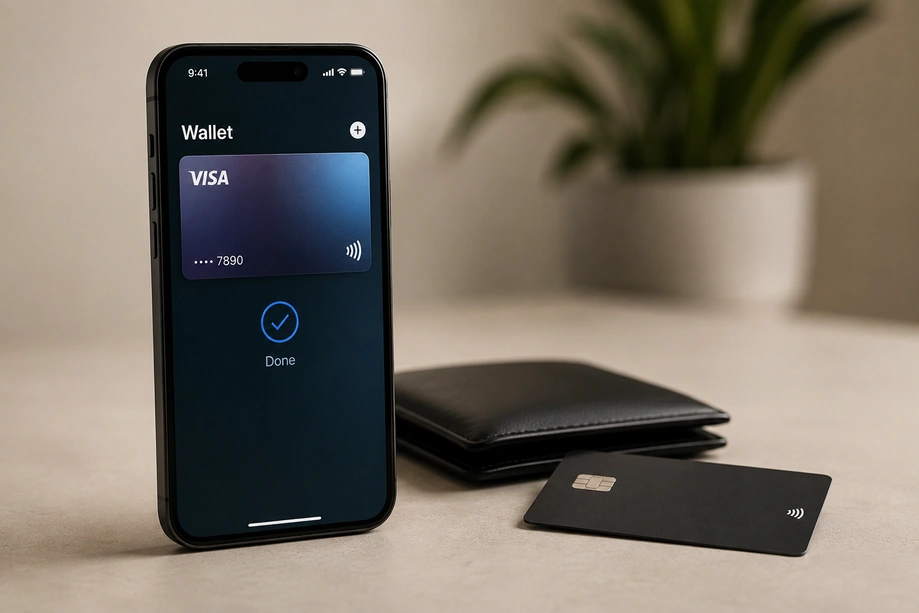
Digital Wallets: How They Work, Benefits, Security and the Future of Payments in 2026
Digital wallets have moved from being a convenient alternative to physical cards to becoming one of the most important parts of the global payments ecosystem.
Today, consumers can pay for goods and services using a smartphone, smartwatch or other connected device without physically presenting a debit or credit card. Depending on the wallet, they can also store payment cards, tickets, loyalty cards, passes and other digital credentials.
The shift is particularly important for e-commerce. According to Worldpay’s 2026 Global Payments Report, digital wallets accounted for 56% of global e-commerce transaction value in 2025 and 33% of in-person transaction value. The report covers 42 markets and more than 63,000 consumers.
That raises a bigger question: what exactly is a digital wallet, how does it work, how safe is it, and why are businesses increasingly treating digital wallets as essential payment infrastructure?
What Is a Digital Wallet?
A digital wallet is a software application or online service that allows users to securely store and use digital versions of payment credentials and other items.
Depending on the provider, a digital wallet may allow users to store:
- Debit cards
- Credit cards
- Bank account information
- Gift cards
- Loyalty cards
- Boarding passes
- Event tickets
- Transit passes
- Digital IDs in supported markets
- Other digital credentials
Examples include Apple Pay, Google Wallet, Samsung Wallet and PayPal, although these products do not all operate in exactly the same way.
How Does a Digital Wallet Work?
The basic idea is simple: instead of repeatedly presenting or entering physical card information, a digital wallet securely manages payment credentials and helps transmit the information needed to complete a transaction.
A typical setup involves the following steps:
- The user downloads or opens a supported wallet.
- The user adds a debit card, credit card or another supported payment method.
- The bank or payment provider verifies the payment method.
- The wallet securely stores or represents the payment credential.
- The user authenticates when required.
- The wallet communicates the necessary payment information to the merchant.
- The transaction is processed through the relevant payment network or financial institution.
The exact process varies between wallet providers, banks, devices and payment networks.
What Technology Do Digital Wallets Use?
Near Field Communication (NFC)
NFC allows compatible devices to communicate over a short distance. It is the technology commonly associated with tap-to-pay transactions at compatible point-of-sale terminals.
QR Codes
Some wallets use QR codes for payments. A customer may scan a merchant’s code or present a wallet-generated code that the merchant scans.
QR-based payments are particularly important in markets where mobile payments and alternative payment infrastructure are expanding rapidly.
Tokenization
Tokenization is one of the most important technologies behind modern digital wallet security.
Instead of simply sending the underlying card number to a merchant during a wallet transaction, tokenized systems can use a substitute credential or token. This means the information exposed during a transaction can be different from the underlying card number.
This does not make digital wallets completely immune to fraud, but it can reduce the value of payment information intercepted during a transaction.
Digital Wallet vs Debit Card: What’s the Difference?
A common misunderstanding is that digital wallets and debit cards are direct replacements for each other.
In many cases, they actually work together.
A consumer can add a debit card to a digital wallet and then use the phone or smartwatch to make a payment. The underlying bank account and card relationship may remain unchanged.
| Feature | Digital Wallet | Debit Card |
|---|---|---|
| Physical card required | No | Yes |
| Contactless payments | Supported by compatible wallets and devices | Supported by compatible cards |
| Online checkout | Often streamlined | Usually requires card details |
| Tokenization | Common in many wallet systems | Depends on payment infrastructure |
| Device dependency | Generally higher | Lower |
| Merchant acceptance | Growing but varies | Very broad |
So the more accurate description is that digital wallets are increasingly becoming the interface through which people use their existing payment accounts.
Are Digital Wallets Safe?
Digital wallets use several security technologies, but no payment system is completely risk-free.
Common security measures include:
- Device passcodes
- Fingerprint authentication
- Face recognition
- Encryption
- Tokenization
- Transaction monitoring
- Multi-factor authentication in supported services
Google, for example, says Google Wallet uses security measures to protect stored items and supports contactless payments on compatible Android devices with NFC. Features and availability vary by country and region.
The important point is that consumers should not assume that simply using a digital wallet eliminates fraud. Device security, account protection, phishing awareness and transaction monitoring remain important.
What Happens If You Lose Your Phone?
Losing a phone containing a digital wallet can be concerning, but modern devices and wallet systems provide several layers of protection.
Users should protect their devices with a strong passcode or supported biometric authentication and use available device-location or remote-management tools.
If a phone is lost or stolen, users should also contact their bank or payment provider and follow the wallet provider’s instructions for securing or removing payment credentials.
Digital Wallets for Businesses: Why Merchants Are Adopting Them
Types of Digital Wallets
1. Mobile Wallets
Mobile wallets are designed primarily for smartphones and connected devices. Apple Pay, Google Wallet and Samsung Wallet are prominent examples.
2. Online Payment Wallets
Online wallets can simplify web payments by allowing users to pay without repeatedly entering card or payment information. PayPal is a major example.
3. Peer-to-Peer and Merchant Wallets
Some wallet platforms allow users to send money to other people while also supporting merchant payments.
4. Super-App Wallets
Some fintech platforms combine payments with services such as transfers, bill payments, lending, savings, rewards and other financial products.
5. Cryptocurrency Wallets
Crypto wallets are a separate category with different technical and security characteristics. They may manage private keys that allow users to control cryptocurrency assets.
Not every crypto wallet works like a conventional consumer payment wallet, so the two categories should not be treated as identical.
What Are the Benefits of Digital Wallets?
Convenience
Users can access multiple payment credentials from a device they already carry every day.
Faster Checkout
Wallet payments can reduce the amount of information customers need to manually enter during checkout.
Multiple Payment Options
A wallet can make it easier to switch between supported cards, accounts and other payment options.
Better Digital Experiences
Digital wallets can connect payments with loyalty programs, tickets, passes and other digital services.
Why Digital Wallets Matter to E-Commerce
Digital wallets have become particularly important for online retailers because checkout friction can affect whether a customer completes a purchase.
A wallet can allow a shopper to select a saved payment method and authenticate the transaction without manually entering every card field.
This is one reason payment providers and online merchants increasingly treat wallet acceptance as part of a broader checkout strategy.
Worldpay’s 2026 research shows just how significant this shift has become: digital wallets represented 56% of global e-commerce transaction value in 2025.
Why Businesses Are Adopting Digital Wallet Payments
- Faster checkout experiences
- More convenient mobile purchasing
- Support for contactless commerce
- Integration with e-commerce platforms
- Reduced dependence on manual card entry
- Integration with loyalty and customer experiences
- Support for changing consumer payment preferences
For businesses, the question is increasingly less about whether digital wallets are a passing trend and more about which wallet and payment options their customers actually prefer.
The Global Digital Wallet Market in 2026
Digital wallet adoption is no longer concentrated in one region.
Worldpay’s 2026 research shows significant regional differences in payment behaviour, while Sensor Tower’s 2026 research highlights the increasing role of mobile wallet apps across major markets.
Asia-Pacific remains a particularly important region for mobile wallet adoption, while digital wallets are also expanding across North America, Europe, Latin America, Africa and the Middle East.
This regional variation matters because there is no single global digital wallet model. Wallets can be card-funded in some markets and more closely connected to account-to-account payment systems or broader fintech ecosystems in others.
Digital Wallets in Nigeria and Africa
Africa’s digital payments market presents a different opportunity from mature card-led markets.
In Nigeria, fintech companies have helped accelerate digital payments, transfers and mobile-first financial services. Platforms such as OPay, PalmPay, Moniepoint and other fintech providers have contributed to a rapidly changing financial ecosystem.
Nigeria’s opportunity is particularly interesting because digital wallets and mobile financial services can reach consumers and businesses that may not interact with traditional banking in the same way as customers in mature card markets.
The next phase of competition is therefore likely to involve more than simple payments. Wallet providers will increasingly compete through transfers, merchant services, savings, lending, rewards, commerce integrations and other financial products.
Apple Pay vs Google Wallet vs Samsung Wallet vs PayPal
| Wallet | Primary Strength | Typical Ecosystem |
|---|---|---|
| Apple Pay | Device-based payments and Apple ecosystem integration | iPhone, Apple Watch and other supported Apple devices |
| Google Wallet | Android payments and digital passes | Android and Wear OS |
| Samsung Wallet | Samsung device ecosystem and payments | Supported Galaxy devices |
| PayPal | Online payments and money movement | Web, mobile and participating merchants |
The best digital wallet depends heavily on the user’s device, country, bank, preferred payment methods and the merchants they use.
How to Choose a Digital Wallet
- Check availability: Make sure the wallet is supported in your country.
- Check your bank: Confirm that your cards or accounts can be added.
- Check merchant acceptance: Make sure the wallet works where you normally shop.
- Review security features: Look for strong device authentication and transaction protections.
- Consider convenience: Choose a wallet that works naturally with the devices and services you already use.
- Check fees: Understand whether transfers, currency conversion or other services carry charges.
What Are the Disadvantages of Digital Wallets?
- Some merchants may not accept every wallet.
- Features can vary by country.
- Some services require compatible smartphones or devices.
- Internet or connectivity can affect certain transactions.
- Lost or compromised devices create security concerns.
- Users may become dependent on a particular technology ecosystem.
- Privacy and data-sharing policies vary between providers.
These limitations mean digital wallets are unlikely to eliminate every other payment method in the near term.
Are Digital Wallets Safe? Everything You Need to Know About Mobile Payment Security
Will Digital Wallets Replace Debit Cards?
Probably not completely.
The more realistic future is that digital wallets will increasingly become the interface through which consumers use debit and credit cards.
In other words, the physical card may become less visible without the underlying account disappearing.
This distinction is important. A customer can add a debit card to a digital wallet and continue spending from the same bank account. The wallet changes the payment experience rather than necessarily replacing the financial account behind it.
Digital Wallet Trends to Watch in 2026
- AI-powered financial experiences that help users understand spending and manage finances.
- Digital identity becoming more closely connected with wallet platforms in supported markets.
- Cross-border payments becoming more integrated with digital payment ecosystems.
- Payment apps moving into physical stores as QR and mobile payment acceptance expands.
- Wallets becoming financial ecosystems rather than simple payment containers.
- Greater competition around rewards and merchant partnerships.
Worldpay’s 2026 research also projects that payment apps could account for 46% of global point-of-sale value by 2030, showing how the broader mobile and digital payment ecosystem could continue expanding beyond online checkout.
Frequently Asked Questions About Digital Wallets
What is a digital wallet?
A digital wallet is an application or online service that securely manages payment information and other digital credentials and allows users to make supported payments electronically.
How does a digital wallet work?
A digital wallet allows users to add supported payment methods, verifies those credentials and then facilitates payments through technologies such as tokenization, NFC or QR codes, depending on the wallet and transaction.
Are digital wallets safe?
Digital wallets use security technologies such as tokenization, encryption and device authentication. However, users still need to protect their devices and accounts because no payment system is completely risk-free.
What are examples of digital wallets?
Examples include Apple Pay, Google Wallet, Samsung Wallet and PayPal. Availability and functionality vary by country and provider.
Can a digital wallet replace a debit card?
A digital wallet can reduce the need to physically carry a debit card, but the debit card or underlying bank account may still fund the transaction. Physical cards and digital wallets are therefore likely to coexist for some time.
Do digital wallets work without the internet?
It depends on the wallet, device and transaction. Some contactless transactions can work without an active internet connection, while other wallet functions require connectivity.
Are digital wallets used in Nigeria?
Yes. Nigeria has a rapidly developing digital payments and fintech ecosystem, with mobile-first financial platforms offering payment, transfer and other financial services.
The Future of Digital Wallets
Digital wallets are becoming much more than electronic versions of physical wallets.
They are increasingly becoming the interface connecting consumers with cards, bank accounts, merchants, loyalty programs, financial services and digital credentials.
The most important change may therefore not be the disappearance of the debit card itself.
It may be the disappearance of the need to think about the card at all.
As digital wallets become more deeply integrated into smartphones, e-commerce platforms, financial applications and everyday services, payment is increasingly becoming something that happens in the background.
For consumers, that means faster and more convenient transactions. For businesses, it means adapting checkout experiences to the payment methods customers increasingly expect.
And for the financial industry, digital wallets represent a much bigger transformation: the gradual movement from physical financial products toward software-driven financial experiences.
Digital wallets may not eliminate debit cards anytime soon. But they are already changing how those cards are used, how people shop and how businesses get paid.