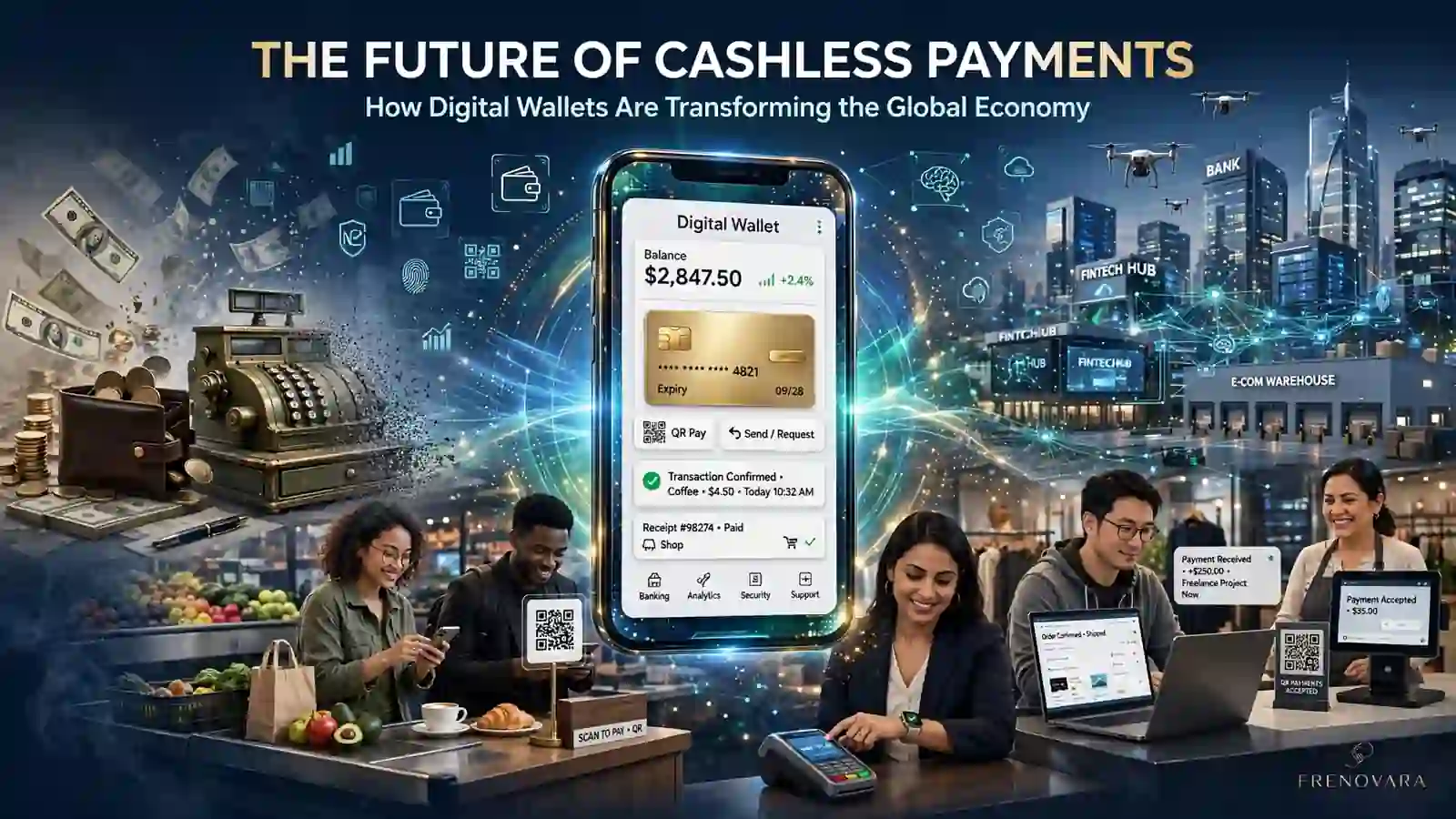

The Future of Cashless Payments: Are Digital Wallets Replacing Cash?
For thousands of years, physical cash has been the foundation of commerce.
Whether buying groceries, paying salaries, or settling debts, coins and paper money have remained central to everyday life.
Today, however, that reality is changing faster than ever before.
Millions of people now leave home without carrying cash. Instead, they carry smartphones capable of making payments in seconds.
A simple tap, QR code scan, fingerprint, or facial recognition can complete transactions almost instantly.
From Lagos to London, New York to Nairobi, digital payments are steadily replacing traditional cash transactions.
This transformation raises one important question:
Are digital wallets replacing cash, or are we simply witnessing the evolution of how money moves?
The answer reveals far more than changing payment habits; it highlights one of the biggest financial revolutions of the twenty-first century.
Understanding Cashless Payments
Cashless payments refer to financial transactions completed without exchanging physical banknotes or coins.
Instead, payments are processed electronically using technologies such as:
- Digital wallets
- Mobile banking
- Contactless cards
- QR code payments
- Online bank transfers
- Smartwatches
- Payment apps
This shift allows consumers to pay almost anywhere using connected devices.
As digital infrastructure improves, businesses and consumers increasingly prefer electronic payments because they are faster, easier, and often more secure.
To better understand the technology driving this transformation, our complete guide on how digital wallets work explains why millions of people are embracing mobile payments every day.
The Rapid Rise of Digital Wallets
Digital wallets have become the face of the cashless economy.
Unlike traditional wallets that carry cash and cards, digital wallets securely store payment credentials inside smartphones and other connected devices.
Modern digital wallets can hold:
- Debit cards
- Credit cards
- Boarding passes
- Event tickets
- Loyalty cards
- Gift cards
- Identification documents
Instead of reaching for a physical wallet, users simply unlock their devices and complete transactions in seconds.
This convenience has significantly accelerated global adoption.
Why Consumers Prefer Cashless Payments
Convenience remains one of the strongest drivers behind digital payment adoption.
Consumers appreciate being able to:
- Shop without carrying cash.
- Pay online instantly.
- Transfer money in seconds.
- Split bills digitally.
- Monitor spending through mobile apps.
Digital transactions also generate instant payment records, helping users better manage their finances.
For younger generations especially, cash increasingly feels unnecessary.
Businesses Are Accelerating the Shift
The movement toward cashless payments isn’t being driven only by consumers.
Businesses are embracing digital payments because they offer operational advantages.
Cashless systems help companies:
- Reduce checkout times.
- Lower cash handling expenses.
- Improve accounting accuracy.
- Reduce theft risks.
- Increase customer satisfaction.
This explains why more merchants now support QR code payments, mobile wallets, and contactless transactions.
Businesses adopting these technologies are also discovering new revenue opportunities through digital commerce.
Our recent analysis on Digital Wallets for Businesses explains why merchants worldwide are embracing mobile payments faster than ever.
Related Read
Continue exploring the digital payment revolution:
- What Is a Digital Wallet? How It Works and Why Millions Use It in the Digital Economy
- How Stripe Became One of the World’s Most Valuable Fintech Companies
- How Mobile Money Is Powering African E-commerce (2026)
- Digital Wallet vs Mobile Banking: What’s the Difference and Which One Should You Use?
- Top 10 Digital Wallets in the World (2026): The Biggest Mobile Payment Apps Transforming Global Finance
Africa’s Cashless Revolution
Africa has become one of the world’s most exciting digital payment markets.
Unlike many developed economies that first built traditional banking infrastructure, several African countries leapfrogged directly into mobile finance.
Today, millions rely on:
- Mobile money.
- Agent banking.
- QR code payments.
- Smartphone wallets.
- Digital banking platforms.
This innovation has dramatically expanded financial inclusion while creating entirely new opportunities for entrepreneurs and businesses.
Companies like Kuda Bank are helping reshape digital banking by making financial services more accessible through smartphones.
Learn more about Kuda Bank’s business model and how digital-first banks are challenging traditional financial institutions:
Is Cash Becoming Obsolete?
Although digital payments continue growing rapidly, cash remains important.
Many consumers still prefer cash because it offers:
- Universal acceptance.
- Offline usability.
- Privacy.
- Independence from internet connectivity.
In many developing regions, physical currency remains essential for daily commerce.
Rather than disappearing overnight, cash is gradually becoming one payment option among many.
Most experts now expect the future to be less-cash rather than completely cashless.
The Technologies Powering the Cashless Economy
The move toward cashless payments is not driven by digital wallets alone.
Several technologies now work together to create faster, safer, and more convenient payment experiences.
These include:
- Near Field Communication (NFC)
- QR code technology
- Artificial Intelligence (AI)
- Cloud computing
- Biometric authentication
- Tokenization
- Blockchain
- 5G mobile networks
Together, these innovations are redefining how money moves across the global economy.
Contactless Payments Are Becoming Everyday Habits
Only a decade ago, tapping a phone to pay for groceries seemed futuristic.
Today, contactless payments have become routine in many countries.
Consumers can now complete purchases using:
- Smartphones
- Smartwatches
- Contactless debit cards
- Contactless credit cards
Instead of waiting for cash or card authorization, transactions often take just a few seconds.
For retailers, this means:
- Faster checkout lines
- Improved customer experience
- Higher transaction efficiency
As more businesses modernize their payment systems, contactless technology is becoming an expectation rather than a luxury.
QR Code Payments Are Transforming Small Businesses
One of the most important innovations in emerging markets is QR code payments.
Unlike expensive point-of-sale terminals, merchants simply display a printed QR code.
Customers scan it using their preferred payment application and complete transactions instantly.
QR payments offer several advantages:
- Low implementation costs
- Easy setup
- Faster payments
- Improved transaction records
This affordability has made QR technology particularly attractive to:
- Street vendors
- Small retailers
- Restaurants
- Market traders
- Independent service providers
For many entrepreneurs, QR codes represent the first step into the digital economy.
Artificial Intelligence Is Making Payments Smarter
Artificial intelligence is rapidly transforming financial services.
Instead of merely processing payments, AI now helps financial institutions:
- Detect fraud in real time.
- Identify suspicious spending patterns.
- Recommend financial products.
- Predict customer behavior.
- Automate customer support.
- Reduce transaction risks.
Rather than reacting after fraud occurs, AI increasingly prevents fraudulent transactions before they happen.
This dramatically improves payment security.
Security Remains the Biggest Priority
As digital transactions increase, so do cybersecurity concerns.
Modern payment providers invest heavily in technologies such as:
- Encryption
- Tokenization
- Two-factor authentication
- Facial recognition
- Fingerprint authentication
- Behavioral analytics
These systems work together to protect sensitive financial information.
If you’re concerned about payment safety, our guide on Digital Wallet Security explains how consumers can better protect themselves against fraud and cybercrime.
Related Read
Want to understand the businesses behind modern payments?
Continue reading:
- How Stripe Became One of the World’s Most Valuable Fintech Companies
https://frenovara.com/stripe-success-story-global-payments-empire/ - Kuda Bank Business Model Explained
https://frenovara.com/kuda-bank-business-model-explained/ - What Is a Digital Wallet? How It Works
https://frenovara.com/what-is-a-digital-wallet-how-it-works/
Central Bank Digital Currencies (CBDCs)
Governments are also preparing for the future.
Many central banks are developing Central Bank Digital Currencies (CBDCs).
Unlike cryptocurrencies, CBDCs are official digital versions of national currencies.
Potential benefits include:
- Faster payments
- Lower transaction costs
- Improved financial inclusion
- Better payment efficiency
- Easier cross-border transactions
Although still developing in many countries, CBDCs may become an important component of future payment systems.
Cashless Payments Improve Business Intelligence
Digital payments generate valuable business data.
Unlike cash transactions, electronic payments provide merchants with insights into:
- Customer purchasing habits
- Peak shopping periods
- Product demand
- Repeat customers
- Seasonal trends
This information helps businesses make smarter decisions regarding:
- Inventory management
- Marketing campaigns
- Customer loyalty
- Pricing strategies
The result is improved operational efficiency.
Financial Inclusion Continues Expanding
One of the greatest advantages of digital payments is increased financial inclusion.
Millions of people who previously lacked traditional bank accounts can now:
- Receive salaries.
- Save money.
- Pay bills.
- Transfer funds.
- Shop online.
- Access financial services.
Africa continues leading many of these innovations through mobile money and smartphone banking.
Our feature on How Mobile Money Is Powering African E-commerce explores this transformation in greater detail.
Challenges Slowing Cashless Adoption
Despite remarkable progress, several obstacles remain.
Digital Divide
Not everyone owns smartphones or enjoys reliable internet connectivity.
Infrastructure Limitations
Power failures and network outages can temporarily interrupt digital transactions.
Privacy Concerns
Some users worry that digital payments create permanent records of every purchase.
Cybercrime
Hackers continuously develop new methods to target consumers and businesses.
Payment providers must constantly improve security to stay ahead.
Consumer Behavior Is Changing
Younger generations increasingly grow up using digital payments as their primary financial tools.
Many consumers now instinctively reach for their smartphones before searching for physical cash.
This behavioral shift may prove even more influential than technological innovation itself.
As digital-native generations become the largest consumer groups, demand for cashless services will likely continue growing.
Will Cash Ever Truly Disappear?
For decades, experts have predicted the end of physical cash.
Yet, despite the explosive growth of digital payments, cash continues to play an important role in many economies.
In reality, the future is unlikely to be completely cashless.
Instead, it will be cash-light.
Physical currency will continue serving important purposes:
- Emergency transactions during network outages.
- Payments in remote communities.
- Small-value purchases.
- Privacy-conscious consumers.
- Regions with limited digital infrastructure.
Rather than eliminating cash, digital wallets are gradually becoming the preferred option whenever convenience and connectivity are available.
Digital Wallets Are Becoming Digital Identities
The next generation of digital wallets will do far more than process payments.
Technology companies are transforming them into complete digital identity platforms.
Future digital wallets may securely store:
- National ID cards
- Driver’s licenses
- Health insurance cards
- Medical records
- Boarding passes
- Hotel room keys
- Student IDs
- Government certificates
- Event tickets
Your smartphone is gradually becoming your personal financial and identity hub.
Artificial Intelligence Will Personalize Financial Decisions
Artificial intelligence is expected to transform digital wallets into intelligent financial assistants.
Instead of simply storing payment methods, future wallets could:
- Recommend cheaper payment options.
- Predict monthly expenses.
- Detect unusual spending.
- Suggest savings opportunities.
- Warn users about scams.
- Automatically organize subscriptions.
- Offer personalized budgeting advice.
This evolution will make digital wallets far more valuable than today’s payment applications.
Businesses That Ignore Cashless Payments Risk Falling Behind
Consumer expectations continue changing rapidly.
Modern customers increasingly expect businesses to support:
- QR code payments.
- Contactless payments.
- Mobile wallets.
- Instant digital receipts.
- Multiple payment options.
Companies that fail to modernize risk losing customers to more technologically advanced competitors.
Businesses adopting digital payment technologies also gain access to valuable operational insights that improve decision-making.
Our analysis of how Stripe built its global payments empire demonstrates how payment innovation continues reshaping modern commerce.
Related Read
Expand your understanding of the digital economy:
- Are Digital Wallets Safe? Everything You Need to Know About Mobile Payment Security
- Why Digital Wallets May Replace Debit Cards Sooner Than You Think
- Why Kuda Bank Is Winning Millions of Customers: The Digital Banking Revolution in Nigeria
- How Stripe Became One of the World’s Most Valuable Fintech Companies
- The Untold Story of Kuda Bank: How Nigeria’s Digital Bank Is Challenging Traditional Banks
- How Google Pay Became a Global Digital Wallet and Changed Digital Payments Forever
Africa Could Shape the Future of Global Payments
Africa has become one of the world’s most innovative financial technology markets.
Unlike many developed economies that evolved gradually from traditional banking, several African countries adopted mobile-first financial systems.
This creates unique opportunities in:
- Mobile money
- Agent banking
- Cross-border payments
- Digital wallets
- Financial inclusion
- SME financing
Many global payment innovations are now being inspired by African fintech ecosystems.
Frequently Asked Questions (FAQs)
What Are Cashless Payments?
Cashless payments are financial transactions completed electronically without exchanging physical cash. Examples include digital wallets, contactless cards, QR code payments, and online transfers.
Are Digital Wallets Replacing Cash?
Digital wallets are reducing reliance on physical cash, but cash continues serving important purposes in many economies. Most experts expect both systems to coexist for years.
Why Are Businesses Adopting Cashless Payments?
Businesses benefit from:
- Faster checkout
- Lower operating costs
- Better financial records
- Increased customer convenience
- Improved security
- Better business analytics
Are Digital Wallets Safe?
Modern digital wallets use advanced security technologies including:
- Encryption
- Tokenization
- Biometric authentication
- Artificial intelligence fraud detection
Consumers should still follow good cybersecurity practices.
What Is the Biggest Advantage of Cashless Payments?
Convenience.
Consumers can complete purchases quickly while businesses improve efficiency and reduce cash-handling costs.
Will Central Bank Digital Currencies Replace Cash?
CBDCs may become an important part of future payment systems, but most economists believe physical cash will remain available for the foreseeable future.
Beyond the Headlines
The transition toward cashless payments represents far more than a technological upgrade.
It reflects a fundamental transformation in how societies exchange value.
Digital wallets are no longer just payment tools.
They are becoming financial ecosystems that combine payments, identity, artificial intelligence, security, commerce, and personal finance into a single platform.
Businesses that embrace this transformation will likely gain competitive advantages through efficiency, customer satisfaction, and data-driven decision-making.
Consumers who understand these technologies will be better prepared for a future where digital transactions become the global standard.
The future of money is unlikely to eliminate cash entirely.
Instead, it will expand consumer choice, making payments faster, smarter, safer, and more connected than ever before.
For individuals, businesses, and governments alike, the question is no longer whether cashless payments will continue growing.
The question is how quickly the world will adapt.