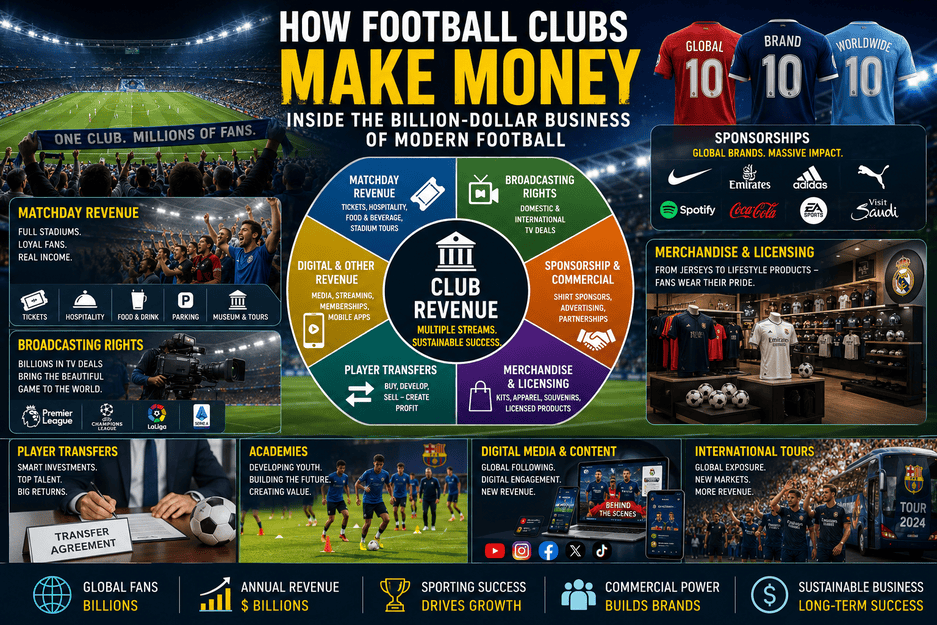
How Football Clubs Make Money: Inside the Billion-Dollar Business of Modern Football
Every weekend, millions of supporters flood football stadiums while billions more watch from their televisions, smartphones, and streaming platforms.
They celebrate goals.
Buy jerseys.
Travel across countries to support their clubs.
Subscribe to premium sports channels.
Share match highlights across social media.
For supporters, football is passion.
For club owners, it is also big business.
Behind every successful football club lies an economic machine that operates throughout the year.
Modern football clubs employ hundreds of people, negotiate billion-dollar commercial agreements, own valuable assets, and compete globally for supporters, sponsors, and investors.
Today’s elite clubs resemble multinational corporations more than traditional sports teams.
But how exactly do they make money?
The answer may surprise many football fans.
Football Clubs Have Become Global Businesses
Football clubs were once local community organizations funded primarily by ticket sales and donations.
Today, the world’s biggest clubs operate as international brands.
Many have supporters in virtually every country.
Their influence extends beyond football into:
- Fashion.
- Entertainment.
- Technology.
- Gaming.
- Tourism.
- Finance.
- Media.
The larger a club’s global audience becomes, the more valuable its commercial opportunities become.
Football is no longer limited by geography.
A supporter in Lagos can buy the same jersey as a supporter in London or Tokyo within minutes.
Matchday Revenue Still Matters
Despite television dominating football finances, matchday income remains an important source of revenue.
Every home game creates multiple streams of income.
These include:
- Match tickets.
- VIP hospitality packages.
- Executive suites.
- Stadium parking.
- Food and beverages.
- Official matchday programmes.
- Club museums.
- Stadium tours.
Elite clubs often sell out stadiums every week.
Some supporters also purchase premium hospitality experiences that cost significantly more than ordinary tickets.
These packages generate substantial profits.
Broadcasting Rights Are Football’s Biggest Income Source
Television changed football forever.
Today, broadcasting agreements represent the largest source of income for many professional clubs.
Leagues negotiate broadcasting deals worth billions because football consistently attracts enormous audiences.
Broadcasters compete aggressively for exclusive rights because live football remains one of the few forms of entertainment people prefer watching in real time.
Revenue comes from:
Domestic Broadcasting
Television rights sold within a league’s home country.
International Broadcasting
Matches sold to broadcasters across global markets.
As football’s popularity continues growing worldwide, international broadcasting rights become increasingly valuable.
Sponsorship Powers Modern Football
Walk into any football stadium and commercial branding is everywhere.
Sponsors appear on:
- Match jerseys.
- Training kits.
- Stadium advertising boards.
- Press conference backdrops.
- Digital content.
- Social media.
- Club websites.
Major global companies invest heavily because football delivers worldwide exposure.
Popular sponsors include:
- Airlines.
- Banks.
- Telecommunications companies.
- Sportswear manufacturers.
- Beverage brands.
- Technology companies.
- Automotive firms.
These partnerships often last several years and contribute hundreds of millions of dollars to club revenues.
Shirt Sponsorships Are Worth Fortunes
Perhaps the most recognizable commercial partnership is the shirt sponsor.
The logo across the front of a football jersey is premium advertising space.
Because matches attract massive audiences, companies willingly pay enormous sums for that visibility.
Some sponsorship agreements rank among the largest marketing contracts in global sport.
Supporters may simply see a logo.
Businesses see millions of potential customers.
Kit Manufacturers Drive Commercial Growth
Football shirts are more than uniforms.
They have become global fashion products.
Manufacturers compete to partner with elite clubs because supporters purchase millions of jerseys every season.
Every new season typically includes:
- Home kit.
- Away kit.
- Third kit.
- Goalkeeper kit.
- Training collection.
- Lifestyle apparel.
Limited editions frequently sell out within hours.
This creates recurring commercial opportunities every single year.
Global Fan Bases Increase Revenue
The world’s biggest clubs no longer depend solely on supporters living near their stadiums.
Technology has transformed football into a global product.
Supporters now interact through:
- Social media.
- Mobile applications.
- Streaming platforms.
- Online stores.
- Digital memberships.
A club with hundreds of millions of supporters enjoys enormous commercial advantages over smaller competitors.
Every additional supporter represents another potential customer.
Why Success On the Pitch Matters Financially
Winning trophies does more than create memorable moments.
Success directly influences club finances.
Victories often lead to:
- Higher prize money.
- Greater sponsorship opportunities.
- Increased merchandise sales.
- More broadcasting exposure.
- Stronger global reputation.
- Expanded fan bases.
Competitive success and financial success increasingly reinforce one another.
This explains why clubs invest heavily in players, coaches, facilities, and technology.
Winning is not only about prestige.
It is also good business.
Merchandise Has Become a Billion-Dollar Business
Football shirts are no longer just sportswear.
They have become global fashion products and powerful symbols of identity.
Every season, clubs launch new collections that include:
- Home jerseys.
- Away kits.
- Third kits.
- Goalkeeper shirts.
- Training apparel.
- Jackets.
- Hoodies.
- Scarves.
- Caps.
- Bags.
- Lifestyle collections.
Millions of supporters purchase these products every year.
For elite clubs, merchandise sales contribute hundreds of millions of dollars annually.
Supporters are not simply buying clothing—they are buying belonging, loyalty, and pride.
Licensing Creates Revenue Beyond the Stadium
Clubs also earn income by licensing their brands.
Their names, logos, and intellectual property appear on thousands of products worldwide.
These include:
- Video games.
- Football cards.
- Toys.
- Watches.
- School supplies.
- Mobile accessories.
- Collectibles.
- Home décor.
Every licensed product generates royalties, providing clubs with additional revenue without manufacturing the products themselves.
Player Transfers Can Generate Huge Profits
One of football’s most unique business models is the transfer market.
Clubs buy and sell players just as businesses invest in valuable assets.
A successful transfer strategy can dramatically improve a club’s finances.
Many clubs purchase young talents, develop them, and later sell them for substantial profits.
Transfer agreements often include:
- Initial transfer fees.
- Performance bonuses.
- Sell-on clauses.
- Loyalty payments.
- Agent commissions.
For well-run clubs, intelligent recruitment becomes both a sporting and financial strategy.
Football Academies Are Long-Term Investments
Youth academies are among football’s most valuable assets.
Instead of purchasing every player, clubs develop future stars internally.
Academies provide several advantages:
- Lower recruitment costs.
- Long-term talent pipeline.
- Potential transfer income.
- Stronger club identity.
Some academy graduates become club legends.
Others generate millions through future transfers.
The Business of Football: How the World’s Biggest Sport Became a Trillion-Dollar Industry
Either outcome creates value.
Social Media Has Become a Revenue Machine
Modern football clubs are also media companies.
Their supporters consume content every day—not only on matchdays.
Popular platforms include:
- Instagram.
- Facebook.
- X.
- TikTok.
- YouTube.
- Snapchat.
Through these channels, clubs generate revenue via:
- Advertising.
- Sponsored posts.
- Brand collaborations.
- Premium content.
- Fan subscriptions.
A viral video or player announcement can reach tens of millions of people within hours.
That level of exposure attracts global advertisers.
Digital Memberships Increase Fan Loyalty
Many clubs now offer digital memberships for supporters who live far from their stadiums.
Benefits may include:
- Exclusive interviews.
- Behind-the-scenes videos.
- Digital collectibles.
- Matchday content.
- Early ticket access.
- Discounts on merchandise.
These memberships create recurring income while strengthening relationships with supporters worldwide.
International Tours Are Extremely Profitable
Every summer, major clubs travel internationally for pre-season matches.
These tours are much more than football games.
They function as global marketing campaigns.
Benefits include:
- Match appearance fees.
- Sponsorship exposure.
- Merchandise sales.
- New commercial partnerships.
- Fan engagement.
- Media coverage.
Countries across Asia, North America, the Middle East, and Australia regularly host elite clubs because these matches attract enormous audiences.
Stadium Naming Rights
Some clubs generate additional income by selling naming rights to their stadiums.
Instead of carrying only traditional names, stadiums may be associated with commercial partners.
These agreements often last many years and generate substantial long-term revenue.
For businesses, stadium naming offers worldwide visibility.
How Artificial Intelligence Is Revolutionizing Football: From Scouting to VAR
For clubs, it provides predictable income that can support infrastructure development.
Football Clubs Are Becoming Entertainment Companies
Football clubs increasingly compete with entertainment brands rather than only other sports organizations.
They produce:
- Documentaries.
- Podcasts.
- Streaming shows.
- Training videos.
- Interactive fan experiences.
- Mobile applications.
Many supporters engage with their favourite clubs every day—even when no matches are being played.
This continuous engagement creates more commercial opportunities throughout the year.
Commercial Partnerships Continue Expanding
Modern clubs collaborate with businesses across numerous industries.
Partnership categories include:
- Airlines.
- Hotels.
- Financial institutions.
- Insurance companies.
- Technology firms.
- Sports nutrition.
- Gaming companies.
- Consumer electronics.
Each partnership strengthens the club’s financial position while providing sponsors with access to millions of passionate supporters.
Commercial revenue has become one of football’s fastest-growing income sources.
Who Owns Football Clubs?
Football clubs are owned in different ways around the world.
Ownership structures influence how clubs operate, spend money, and pursue success.
The most common ownership models include:
Private Owners
Many clubs are owned by wealthy entrepreneurs or investment groups.
These owners often inject capital into transfers, infrastructure, and commercial expansion.
Publicly Listed Clubs
Some football clubs trade on stock exchanges, allowing investors to buy shares.
This provides access to additional funding while increasing financial transparency.
Fan Ownership
A number of clubs remain partly or fully owned by their supporters.
This model gives fans a voice in important club decisions and helps preserve the club’s identity.
Each ownership structure has its advantages and challenges, but all require sound financial management.
Financial Fair Play (FFP)
As football revenues grew, so did spending.
Some clubs accumulated enormous debts while attempting to compete with wealthier rivals.
To encourage sustainability, governing bodies introduced Financial Fair Play (FFP) regulations.
The objectives of FFP include:
- Promoting responsible spending.
- Reducing excessive financial losses.
- Protecting long-term club stability.
- Improving competitive balance.
Although Financial Fair Play continues to generate debate, it has encouraged clubs to pay greater attention to their financial health.
Why Some Clubs Lose Money Despite Huge Revenue
Generating billions of dollars does not automatically guarantee profitability.
Football remains one of the most expensive industries to operate.
Major expenses include:
- Player salaries.
- Transfer fees.
- Coaching staff.
- Stadium maintenance.
- Travel.
- Youth development.
- Medical departments.
- Technology investments.
Poor financial decisions can quickly erase commercial success.
This is why effective management is just as important as winning trophies.
The Future of Football Finance
Football continues evolving rapidly.
Several trends are expected to shape the industry’s future:
Artificial Intelligence
AI will improve scouting, tactical planning, injury prevention, and commercial decision-making.
Digital Memberships
Clubs will continue developing subscription-based digital communities for supporters worldwide.
Smart Stadiums
Technology will enhance fan experiences while reducing operational costs.
Global Commercial Expansion
Clubs will increasingly target emerging football markets across Africa, Asia, and North America.
Sustainable Business Models
Financial discipline will become even more important as clubs seek long-term stability.
Football’s commercial future remains incredibly promising.
Five Business Lessons Entrepreneurs Can Learn From Football Clubs
Football clubs offer valuable lessons for entrepreneurs.
1. Build a Recognizable Brand
Supporters remain loyal because clubs invest consistently in their identity.
Strong brands create lasting value.
2. Diversify Revenue Streams
Successful clubs never depend on one source of income.
Businesses should also develop multiple revenue channels.
3. Invest in Talent
Youth academies demonstrate the importance of developing future leaders.
Businesses grow when they invest in people.
4. Think Globally
Football clubs now serve supporters across every continent.
Modern businesses should also embrace international opportunities.
5. Adapt to Technology
From AI to streaming platforms, football constantly evolves.
Businesses that embrace innovation remain competitive.
Frequently Asked Questions (FAQs)
What Is the Biggest Source of Income for Football Clubs?
Broadcasting rights generally represent the largest revenue source for elite football clubs, followed closely by commercial sponsorships.
Do Football Clubs Make Money From Player Transfers?
Yes.
Many clubs generate significant profits by developing talented players and selling them for higher transfer fees.
Why Are Football Clubs Worth Billions?
Their value comes from:
- Global fan bases.
- Commercial partnerships.
- Broadcasting income.
- Brand strength.
- Stadium assets.
- Long-term revenue potential.
Do Football Clubs Own Their Stadiums?
Some clubs own their stadiums, while others lease them from governments or private organizations.
Ownership often creates additional long-term revenue opportunities.
Can Smaller Clubs Become Financially Successful?
Absolutely.
Strong scouting, intelligent recruitment, effective academies, and disciplined financial management allow smaller clubs to compete successfully despite limited resources.
Football Is More Than a Sport
Football’s global success extends far beyond the ninety minutes played on the pitch.
It supports millions of jobs across industries including:
- Media.
- Tourism.
- Hospitality.
- Technology.
- Retail.
- Aviation.
- Manufacturing.
- Marketing.
Every match creates economic activity that reaches far beyond the stadium.
Football has become one of the world’s most influential commercial ecosystems.
Beyond the Headlines
When supporters celebrate a goal, they rarely think about broadcasting contracts, sponsorship negotiations, data analytics, merchandising strategies, or billion-dollar commercial partnerships.
Yet these unseen activities keep modern football alive.
The world’s biggest clubs are no longer simply sports organizations.
They are global entertainment brands, technology adopters, marketing powerhouses, and international businesses that influence economies far beyond football itself.
Their success demonstrates an important lesson for entrepreneurs.
Long-term growth is rarely achieved through a single source of income.
It comes from diversification, innovation, strong branding, investment in talent, and continuous adaptation.
Football clubs that master these principles thrive both on and off the pitch.
Businesses can learn from the same playbook.
At Frenovara, we believe understanding the business behind football provides valuable lessons for entrepreneurs, investors, marketers, and innovators seeking sustainable success in an increasingly competitive global economy.