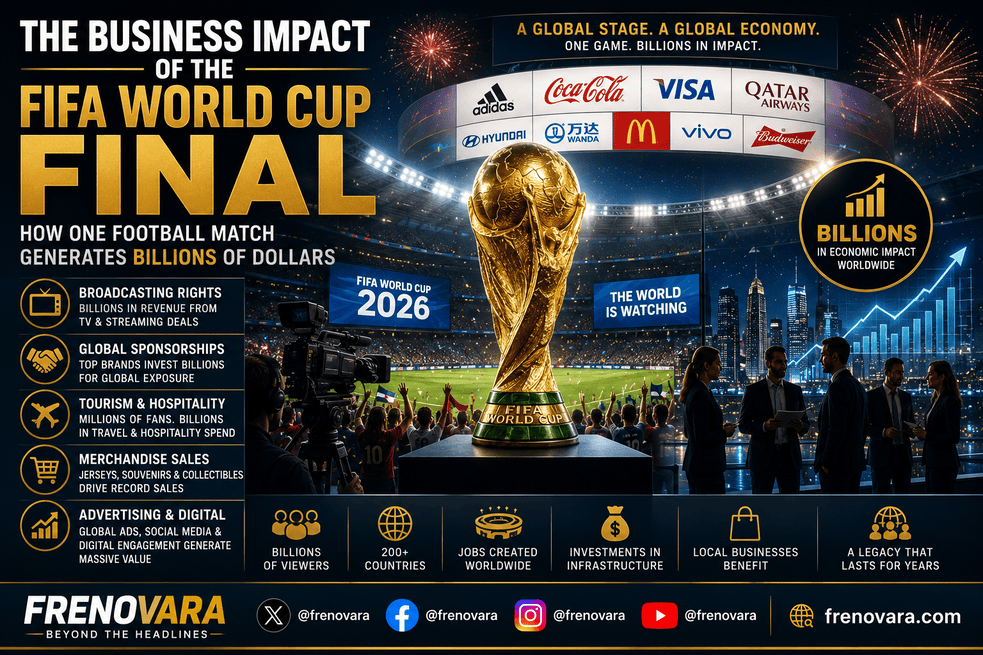
The Business Impact of the FIFA World Cup Final: How One Football Match Generates Billions of Dollars
When football fans think about the FIFA World Cup Final, they imagine unforgettable goals, emotional celebrations, legendary players, and history being made.
Business leaders see something different.
They see one of the most valuable commercial events on Earth.
Behind every pass, every goal, and every trophy celebration lies a sophisticated global business ecosystem worth billions of dollars.
The FIFA World Cup Final is no longer simply the biggest match in football.
It has evolved into one of the world’s most powerful economic events.
From multinational sponsors and television broadcasters to airlines, hotels, streaming platforms, retailers, and technology companies, thousands of businesses benefit from the tournament’s global reach.
The final is where sport, media, technology, entertainment, tourism, and international commerce converge.
More Than a Football Match
Every four years, the World Cup Final captures the attention of billions of people across nearly every continent.
Few global events unite audiences on this scale.
For advertisers, this level of attention is priceless.
Companies spend years preparing campaigns specifically designed around the World Cup because no ordinary sporting event delivers comparable worldwide exposure.
For ninety minutes, the world watches together.
That attention has enormous commercial value.
Broadcasting Rights Worth Billions
One of FIFA’s largest revenue sources comes from broadcasting rights.
Television networks and streaming platforms compete aggressively to secure the rights to broadcast World Cup matches.
These agreements generate billions of dollars because broadcasters know millions of viewers will tune in regardless of where they live.
The World Cup Final consistently ranks among the most-watched live sporting events in the world.
That audience translates directly into advertising revenue for broadcasters.
The larger the audience, the more valuable every commercial break becomes.
Sponsorship Drives Global Revenue
Walk around a World Cup stadium and you’ll notice the logos of some of the world’s biggest companies.
Global brands invest enormous sums to become official FIFA partners.
Why?
Because association with the World Cup builds:
- Global brand recognition.
- Consumer trust.
- International visibility.
- Customer engagement.
Sponsors benefit from:
- Stadium branding.
- Television exposure.
- Digital marketing rights.
- Social media campaigns.
- Promotional events.
- Hospitality opportunities.
For multinational corporations, the World Cup Final offers marketing exposure that few other events can match.
Tourism Creates Massive Economic Activity
Hosting a World Cup transforms local economies.
Fans travel from around the world to attend matches.
How Africa’s Drone Industry Is Creating the Next Billion-Dollar Economy
That spending supports:
- Hotels.
- Airlines.
- Restaurants.
- Ride-sharing services.
- Shopping centres.
- Entertainment venues.
- Local businesses.
Even supporters without match tickets contribute significantly through accommodation, food, transportation, and tourism activities.
The economic ripple effects often continue long after the tournament ends.
Merchandise Sales Reach Record Levels
Official World Cup merchandise represents another major revenue stream.
Popular products include:
- National team jerseys.
- Footballs.
- Scarves.
- Caps.
- Flags.
- Collectibles.
- Souvenirs.
During the World Cup Final, merchandise sales often reach their highest levels as supporters celebrate their teams and commemorate the tournament.
For sportswear manufacturers, the competition represents one of the busiest commercial periods of the football calendar.
Digital Media Has Changed Everything
Twenty years ago, television dominated World Cup coverage.
Today, digital platforms have dramatically expanded commercial opportunities.
Fans consume content through:
- Social media.
- Streaming services.
- Mobile applications.
- Podcasts.
- YouTube.
- Sports websites.
Every highlight clip, interview, reaction video, and social media post generates additional advertising opportunities.
The modern World Cup Final extends far beyond the stadium.
It lives across thousands of digital platforms simultaneously.
Small Businesses Also Benefit
The World Cup is not only profitable for multinational corporations.
Small businesses frequently experience increased sales during the tournament.
Examples include:
- Sports bars.
- Local restaurants.
- Food vendors.
- Printing businesses.
- Event organisers.
- Street merchants.
The excitement surrounding the final creates commercial opportunities at every level of the economy.
How Global Brands Maximize World Cup Marketing
For multinational companies, the FIFA World Cup is more than a sporting event—it’s a global marketing platform.
Months before kickoff, brands begin preparing campaigns designed to capture the attention of billions of football fans.
Marketing strategies typically include:
- Television commercials.
- Social media campaigns.
- Athlete endorsements.
- Limited-edition products.
- Interactive fan experiences.
- Public viewing activations.
- Influencer collaborations.
The objective is simple: associate their brand with one of the world’s happiest and most memorable sporting moments.
For many companies, the World Cup delivers marketing returns that would be difficult to achieve through conventional advertising alone.
Social Media Has Become a Billion-Dollar Marketplace
Every goal scored in a World Cup Final generates an explosion of activity online.
Within seconds, millions of fans begin:
- Posting reactions.
- Sharing highlights.
- Creating memes.
- Uploading videos.
- Discussing controversial decisions.
- Celebrating victories.
This enormous digital engagement creates valuable advertising inventory across platforms like:
- Facebook.
- Instagram.
- X (formerly Twitter).
- TikTok.
- YouTube.
Brands capitalize on trending conversations by launching real-time campaigns that keep them visible while fans remain engaged.
Sports Betting Creates Massive Economic Activity
The World Cup Final is one of the biggest betting events on the global sports calendar.
Millions of supporters place wagers on:
- Match winners.
- Correct scorelines.
- First goalscorers.
- Number of goals.
- Half-time results.
- Player performances.
Licensed betting companies generate substantial revenue during major tournaments.
Meanwhile, broadcasters, data providers, and analytics firms also benefit from increased demand for live statistics and predictive insights.
Technology Companies Power the Tournament
Modern football relies heavily on advanced technology.
Behind every World Cup Final lies a vast digital infrastructure.
Technology companies provide solutions for:
- Video Assistant Referee (VAR).
- Goal-line technology.
- Stadium connectivity.
- Data analytics.
- Ticketing systems.
- Security monitoring.
- Broadcasting equipment.
- Streaming infrastructure.
These innovations improve both the viewing experience and tournament operations while creating significant commercial opportunities.
Hospitality and Luxury Industries Thrive
World Cup finals attract more than ordinary supporters.
Corporate executives, celebrities, politicians, investors, and international business leaders frequently attend the event.
Luxury hospitality packages include:
- Premium seating.
- VIP lounges.
- Fine dining.
- Private transportation.
- Exclusive networking opportunities.
These experiences generate substantial revenue for organizers while allowing companies to strengthen relationships with important clients and partners.
FIFA’s Business Model Explained
Many fans focus on the football.
FIFA focuses on managing one of the world’s most valuable sporting properties.
Its primary revenue streams include:
Broadcasting Rights
Television and streaming agreements remain FIFA’s largest source of income.
Commercial Sponsorship
Official partners invest heavily for global exposure.
Licensing
FIFA licenses its brand for merchandise, games, and commercial products.
Ticket Sales
Millions of supporters purchase tickets throughout the tournament.
Hospitality
Premium experiences generate additional high-value revenue.
Together, these income streams make FIFA one of the wealthiest sporting organizations in the world.
Host Cities Experience Long-Term Benefits
Hosting the World Cup Final often accelerates infrastructure development.
Investments typically include:
- Roads.
- Airports.
- Hotels.
- Public transport.
- Telecommunications.
- Stadium modernization.
Although hosting requires significant investment, many cities benefit from improved infrastructure that continues supporting tourism and economic growth long after the tournament concludes.
Local Entrepreneurs Benefit Too
Not every World Cup success story belongs to multinational corporations.
Small businesses frequently experience increased demand.
Examples include:
- Food vendors.
- Taxi operators.
- Event planners.
- Photographers.
- Merchandise sellers.
- Tourism guides.
- Street retailers.
The tournament creates opportunities across the entire economic spectrum.
Football Influences Consumer Spending
Major sporting events often change purchasing behaviour.
Supporters buy:
- Jerseys.
- Televisions.
- Smartphones.
- Food.
- Drinks.
- Streaming subscriptions.
- Decorations.
- Team merchandise.
Retailers prepare months in advance to meet this increased demand.
The World Cup Final often produces one of the busiest shopping periods in the global sports industry.
Why Businesses Continue Investing
Companies repeatedly invest in the World Cup because the tournament consistently delivers:
- Massive audiences.
- Global visibility.
- Emotional engagement.
- Brand credibility.
- International expansion opportunities.
Few marketing platforms offer comparable worldwide reach within such a concentrated period.
For global brands, missing the World Cup often means losing visibility to competitors.
The Lasting Legacy of the FIFA World Cup
The FIFA World Cup Final lasts just 90 minutes—or slightly longer if extra time and penalties are required.
Its economic impact, however, lasts for years.
Host nations often continue benefiting from:
- Increased international tourism.
- Improved transport infrastructure.
- New business investments.
- Enhanced global reputation.
- Expanded hospitality sectors.
- Long-term commercial partnerships.
Many cities use the World Cup as a catalyst for broader economic development, transforming stadiums, airports, roads, and public transport systems that continue serving residents long after the tournament has ended.
The World Cup is not simply an event.
It is an investment in national visibility.
The Digital Economy Has Changed Football Forever
Twenty years ago, fans watched the World Cup almost exclusively on television.
Today, football has become a digital-first experience.
Supporters consume content through:
- Live streaming.
- YouTube highlights.
- Podcasts.
- Instagram Reels.
- TikTok videos.
- Facebook posts.
- X (formerly Twitter) discussions.
Every goal generates millions of interactions.
Every viral moment creates advertising opportunities.
Every trending topic increases brand exposure.
The World Cup Final has become one of the most valuable digital content generators on the planet.
FIFA’s Commercial Success Offers Lessons for Every Business
Whether you run a multinational corporation or a small startup, FIFA’s business model offers valuable lessons.
Build a Global Brand
FIFA has transformed football into one of the world’s most recognizable brands.
Consistency and long-term vision create trust.
Protect Your Intellectual Property
Official branding, licensing, and merchandising contribute billions in revenue.
Strong brands protect their assets.
Diversify Revenue
FIFA earns money through:
- Broadcasting.
- Sponsorship.
- Licensing.
- Hospitality.
- Ticket sales.
- Digital partnerships.
Successful businesses rarely depend on a single income source.
Create Emotional Connections
People don’t simply watch the World Cup.
They experience it.
Businesses that create emotional relationships often build stronger customer loyalty.
Frequently Asked Questions (FAQs)
How Much Money Does the FIFA World Cup Generate?
The FIFA World Cup generates billions of dollars through broadcasting rights, sponsorships, ticket sales, licensing, merchandising, hospitality, tourism, and digital advertising.
Why Do Companies Sponsor the World Cup?
Because the tournament provides global exposure to billions of football fans across television, streaming platforms, and social media.
Very few events offer comparable international visibility.
Which Industries Benefit Most?
The World Cup positively impacts:
- Broadcasting.
- Hospitality.
- Airlines.
- Hotels.
- Retail.
- Sportswear.
- Advertising.
- Technology.
- Tourism.
- Food and beverage.
Does Hosting the World Cup Help Countries Economically?
It can.
Many host nations experience increased tourism, infrastructure improvements, foreign investment, and stronger international recognition.
However, long-term success often depends on how effectively infrastructure is managed after the tournament.
Why Is the World Cup Final So Valuable?
Because it combines:
- Massive global audiences.
- Emotional engagement.
- Worldwide media attention.
- Commercial partnerships.
- Premium advertising opportunities.
No ordinary sporting event matches its worldwide commercial influence.
Why the FIFA World Cup Matters Beyond Football
The World Cup Final demonstrates the remarkable power of sport.
It creates opportunities for:
- Businesses.
- Governments.
- Entrepreneurs.
- Investors.
- Technology companies.
- Creative industries.
Football has become an economic ecosystem that supports millions of jobs across multiple industries.
The final represents the pinnacle of that ecosystem.
Beyond the Headlines
The FIFA World Cup Final reminds us that modern sport is no longer just about competition.
It is about innovation.
Technology.
Marketing.
Global business.
International cooperation.
The players may decide the champion on the pitch, but behind the scenes thousands of businesses, broadcasters, engineers, designers, hospitality workers, marketers, and entrepreneurs contribute to making the tournament possible.
For entrepreneurs, there is an important lesson.
The greatest businesses rarely sell products alone.
They create experiences.
The FIFA World Cup Final is one of the greatest experiences ever created.
That is why billions watch.
That is why companies invest.
And that is why its economic influence extends far beyond football.
At Frenovara, we believe understanding the business behind global events is just as important as understanding the events themselves. Behind every headline lies an economic story waiting to be discovered.