FRENOVARA
Beyond The Headlines
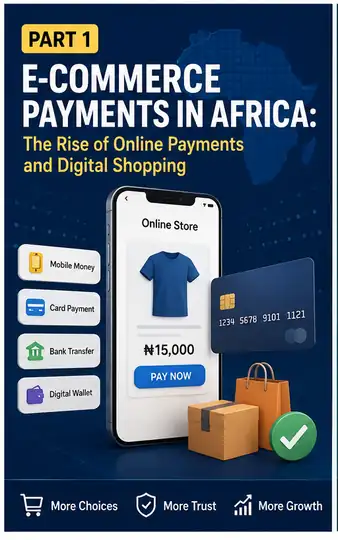
E-commerce Payments in Africa: How Digital Payments Are Changing Online Shopping
E-commerce payments in Africa are becoming one of the most important parts of the continent’s rapidly developing digital economy.
Buying something online may look simple from a customer’s perspective.
A shopper finds a product, adds it to a cart and proceeds to checkout.
Behind that process, however, is a complex financial system.
Banks, fintech companies, payment gateways, card networks, mobile-money providers and digital-wallet platforms can all play a role in moving money from the buyer to the seller.
As African online shopping expands, the quality of these payment systems becomes increasingly important.
A customer may discover a product through social media, visit an online store through a smartphone and complete a purchase without ever entering a physical shop.
The payment experience can determine whether that customer completes the transaction or abandons the purchase.
That makes digital payments more than a technical feature.
They are becoming part of the foundation of African e-commerce.
Why E-commerce Payments in Africa Matter
The growth of online shopping creates a basic requirement.
Customers need a reliable way to pay.
A merchant needs a reliable way to receive money.
Payment providers need to connect both sides securely.
That sounds straightforward, but Africa’s financial environment is diverse.
Different countries use different currencies.
Banking systems vary.
Mobile-money adoption differs from market to market.
Internet access is uneven.
Some consumers have debit or credit cards, while others rely on bank transfers or mobile wallets.
Consequently, there is no single payment method that works perfectly for every African shopper.
Successful e-commerce businesses therefore need to understand the payment preferences of their target customers.
Read these articles on: How African SMEs Are Leveraging E-commerce to Drive Growth
AI and Online Shopping in Africa
Mobile Commerce Is Changing African Online Shopping
Smartphones have become central to digital commerce.
Many consumers discover products, compare prices and communicate with sellers through mobile devices.
For some shoppers, the smartphone is also their primary financial tool.
That has created a natural connection between mobile commerce and digital payments.
A shopper can move from product discovery to checkout within the same device.
This creates an important opportunity for merchants.
A well-designed mobile checkout can reduce friction and make online purchasing feel more natural.
On the other hand, complicated payment forms can discourage customers.
For African e-commerce businesses, mobile payment optimisation is therefore becoming increasingly important.
What do you understand by the “The Rise of Social Commerce in Africa: How Social Media Is Transforming Online Shopping?”
Digital Wallets Are Becoming E-commerce Payment Tools
Digital wallets have changed how many consumers store and transfer money.
Instead of relying entirely on physical cash or traditional cards, customers can maintain balances within digital financial platforms.
These wallets can also become payment tools.
A shopper may use a wallet to pay a merchant, transfer funds or purchase digital services.
The development connects directly with Frenovara’s existing coverage of digital wallets in Africa and the future of digital wallets in Africa.
Those developments matter to e-commerce because the wallet is increasingly becoming part of the online shopping journey.
The relationship can be described simply:
Digital wallet – Payment – Online purchase – Merchant settlement
As wallet adoption grows, e-commerce merchants have another channel through which they can reach customers.
Mobile Money Is Expanding Payment Access
Mobile money is particularly important in markets where traditional banking access has historically been limited.
Customers can use mobile accounts to send, receive and store money without relying entirely on conventional banking infrastructure.
For e-commerce, that creates an important opportunity.
A consumer who does not use an international payment card may still be able to participate in online commerce through mobile-money services where supported.
This can expand the potential customer base.
It also demonstrates why African e-commerce cannot simply copy payment models developed for North America or Europe.
The continent has its own financial behaviour.
Bank Transfers Remain Important
Digital wallets and mobile money are growing, but traditional bank transfers remain an important part of African digital commerce.
In several markets, customers are comfortable transferring money directly from their bank accounts.
The method can be especially relevant for larger purchases or business transactions.
However, manual bank transfers can create friction.
Customers may have to leave the merchant’s website or application.
They may need to copy account details.
They may then return to confirm payment.
That additional effort can create uncertainty for both parties.
Payment technology is therefore increasingly focused on making bank-based payments more seamless.
Payment Gateways Connect Merchants and Customers
Most online shoppers do not see the payment gateway.
They simply see the checkout screen.
The gateway works behind the scenes to connect the merchant with financial institutions and payment networks.
A payment gateway can support several payment methods within one checkout experience.
Depending on the market and provider, these can include:
- Bank cards
- Bank transfers
- Digital wallets
- Mobile money
- Account-to-account payments
- Other local payment methods
This gives merchants flexibility.
Instead of building separate payment connections for every method, businesses can use infrastructure that brings multiple options together.
That can be especially valuable for growing online stores.
Fintech Is Reshaping E-commerce Payments
The rise of African fintech companies has accelerated payment innovation.
Fintech businesses have built infrastructure designed specifically around digital transactions.
Some focus on consumer payments.
Others provide payment tools for businesses.
Some specialise in merchant collections.
Others provide technology that allows international companies to accept payments from African customers.
The result is a more diverse financial ecosystem.
Traditional banks remain important.
However, fintech companies increasingly provide the technology connecting merchants, consumers and financial institutions.
This development also connects with Frenovara’s wider coverage of African fintech and the Nigeria digital banking ecosystem.
Nigeria Shows How Fintech and E-commerce Can Intersect
Nigeria provides a useful example of the relationship between fintech and e-commerce.
The country has a large consumer market, a growing technology sector and a rapidly developing digital-payment ecosystem.
Payment companies such as Paystack and Flutterwave have helped businesses accept digital payments across different channels.
For an online merchant, the ability to accept payments through a familiar local method can make the difference between a successful transaction and an abandoned checkout.
The lesson is important.
E-commerce growth does not depend only on having products available online.
The financial infrastructure must also support the purchase.
Related article: Digital Wallets for Businesses: Why Merchants Are Adopting Them
Payment Choice Can Influence Customer Conversion
Imagine two online stores selling the same product.
The first store offers only one unfamiliar payment method.
The second provides several trusted options.
The second store may have an advantage.
Customers often prefer payment methods they already understand.
A shopper may trust a bank transfer.
Another may prefer a digital wallet.
Someone else may want to use a card.
Providing suitable options can therefore reduce friction.
This is particularly important in markets where payment preferences vary significantly between consumers.
Checkout Experience Matters
Payment infrastructure can be excellent while the checkout experience remains poor.
A customer may encounter:
- Too many steps
- Slow-loading payment pages
- Confusing instructions
- Unexpected fees
- Failed authentication
- Poor mobile design
- Unclear payment confirmation
Each problem creates friction.
That friction can translate into abandoned carts.
E-commerce businesses should therefore think about payments as part of the overall customer experience.
The payment page should feel like a natural continuation of the shopping journey.
Security Is Essential to Digital Commerce
Convenience alone cannot make e-commerce payments successful.
Customers need to trust the payment process.
Cybersecurity has therefore become a central part of digital commerce.
Payment providers must protect transactions from fraud.
Merchants need safeguards against suspicious orders.
Customers need protection against scams and account compromise.
The challenge becomes more complicated as transaction volumes increase.
More digital payments create more opportunities for legitimate commerce.
They can also create more opportunities for criminals.
Strong authentication, fraud monitoring and secure payment infrastructure are therefore essential.
Fraud Can Damage an E-commerce Brand
Payment fraud does not only affect the payment provider.
It can damage the merchant’s reputation.
A customer who experiences a fraudulent transaction may blame the store.
That means merchants have a commercial incentive to work with reliable payment providers.
Fraud prevention should also extend beyond payment processing.
Businesses can monitor unusual purchasing patterns.
They can identify suspicious account activity.
They can introduce additional verification when necessary.
The goal is to protect legitimate customers without creating unnecessary barriers.
Cross-Border E-commerce Creates a Bigger Challenge
Selling within one country is already complicated.
Selling across borders introduces additional considerations.
The merchant may have to deal with:
- Multiple currencies
- Different payment methods
- Foreign-exchange costs
- Different regulations
- Settlement delays
- Fraud risks
- International payment restrictions
These challenges can make cross-border commerce difficult for smaller businesses.
Yet the opportunity is enormous.
A Nigerian business does not necessarily have to sell only to Nigerian consumers.
An online store can potentially reach customers across Africa and beyond.
The payment system must simply support that ambition.
Digital Payments Can Help African SMEs Grow
Small and medium-sized businesses represent a major opportunity for e-commerce.
Many SMEs cannot afford sophisticated financial infrastructure.
Digital payment platforms can lower some of those barriers.
A small business can create an online presence.
It can promote products through social media.
It can accept digital payments.
It can receive transaction notifications.
It can maintain electronic records.
This creates a pathway from informal selling toward more structured digital commerce.
The development connects naturally with Frenovara’s existing article on How African SMEs Are Leveraging E-commerce to Drive Growth.
Payments are one of the tools making that growth possible.
Social Commerce Needs Better Payment Infrastructure
Social commerce is another important part of the ecosystem.
Consumers increasingly discover products through platforms such as Instagram, Facebook, TikTok and messaging applications.
The shopping process can begin with a social-media post.
The customer asks a question.
The seller provides information.
The buyer then completes the transaction.
The easier that payment process becomes, the more attractive social commerce becomes.
This makes digital payments an important supporting layer for the social-commerce trend we previously explored at Frenovara.
The Future Will Be More Connected
The evolution of e-commerce payments is moving toward greater integration.
Customers will not necessarily think about whether they are using a bank, fintech platform or payment gateway.
They will simply expect the transaction to work.
Behind that simple experience could be several interconnected systems.
A shopper might use a digital wallet.
The merchant could use a payment gateway.
The gateway could connect to a bank or payment processor.
Fraud systems could analyse the transaction.
Settlement infrastructure could then move the money to the merchant.
The customer sees one payment.
The infrastructure behind it can be much more complex.
What Comes Next for E-commerce Payments in Africa?
The next stage could introduce even more sophisticated payment experiences.
Artificial intelligence could improve fraud detection.
Digital wallets could become more deeply integrated with online stores.
Payment gateways could support more local and international methods.
Cross-border payment infrastructure could improve.
Mobile commerce could continue expanding.
Businesses could increasingly use embedded financial services.
These changes could make online shopping more accessible to consumers who have historically been underserved by traditional financial systems.
However, the strongest payment platforms will still need to solve basic problems first.
They must be reliable.
They must be secure.
They must be affordable.
And they must be easy to use.
Conclusion: Payments Are Becoming the Foundation of African E-commerce
E-commerce payments in Africa are no longer simply a technical component of online shopping.
They are becoming part of the infrastructure that determines how quickly African digital commerce can grow.
Digital wallets are creating new ways for consumers to pay.
Mobile money is expanding access.
Bank transfers remain important.
Payment gateways are connecting merchants to multiple financial channels.
Fintech companies are building infrastructure that makes digital transactions easier.
Meanwhile, better security and fraud detection are helping create greater trust.
The opportunity extends beyond individual consumers.
African SMEs can use digital payments to participate in online commerce.
Social-commerce businesses can turn product discovery into transactions.
Cross-border merchants can potentially reach customers in other African markets.
As these systems become more connected, the distinction between banking, payments and e-commerce will continue to become less obvious.
The next stage of African digital commerce will therefore depend not only on who sells the best products.
It will also depend on who makes those products easiest and safest to buy.
And that is why the future of e-commerce payments in Africa could be just as important as the future of e-commerce itself.
FRENOVARA — Beyond The Headlines
Image SEO
Suggested filename:ecommerce-payments-africa-digital-wallets.webp
Image title:
E-commerce Payments in Africa
Alt text:
E-commerce payments in Africa using digital wallets mobile money and fintech