FRENOVARA
Insight Beyond The Headlines
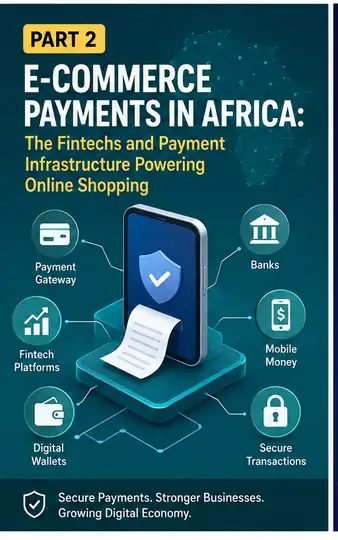
E-commerce Payments in Africa: The Fintechs and Payment Infrastructure Powering Online Shopping
E-commerce payments in Africa are supported by an infrastructure that most shoppers never see.
A customer may simply click “Pay Now” and wait for confirmation.
Behind that button, however, several systems can work together.
A payment gateway may communicate with a bank.
A fintech platform may process the transaction.
A card network may authorise the payment.
A fraud-monitoring system may analyse the activity.
The merchant may then receive confirmation while settlement takes place through another financial channel.
This infrastructure has become increasingly important as African online retail expands.
The continent does not have one uniform payment environment.
Instead, different countries have developed different combinations of banking, mobile money, cards, wallets and fintech services.
That diversity creates challenges.
It also creates opportunities.
Companies that can connect these systems effectively may become some of the most important businesses in Africa’s digital economy.
How E-commerce Payment Infrastructure Works
The simplest way to understand digital commerce payments is to follow the money.
A customer selects a product.
The merchant sends the customer to a payment interface.
The chosen payment method communicates with the relevant financial institution or payment network.
The transaction is authorised or rejected.
If approved, the merchant receives confirmation.
The money is eventually settled into the merchant’s designated account.
The entire process can take only seconds from the customer’s perspective.
Yet different businesses may handle different stages.
That division of responsibility is what makes payment infrastructure possible at scale.
Payment Gateways Connect Online Stores to Financial Networks
An online merchant does not usually want to build direct connections with every bank and payment network.
That would be expensive and complicated.
Payment gateways simplify the process.
A gateway can give merchants access to several payment methods through a single integration.
Depending on the market, customers might be able to pay through:
- Cards
- Bank transfers
- Mobile money
- Digital wallets
- Account-based payments
- Local payment methods
For online businesses, this reduces technical complexity.
Instead of managing several independent payment systems, the merchant can work through an infrastructure provider.
That makes payment gateways particularly valuable to growing businesses.
African Fintech Companies Are Building the Infrastructure
Fintech has become one of the most important forces behind Africa’s digital-payment growth.
Companies have built technology that allows businesses to accept payments without developing the underlying financial infrastructure themselves.
Some focus on merchant payments.
Others provide payment APIs.
Others specialise in international transactions.
Some provide financial services directly to consumers.
The result is a layered ecosystem.
At the customer level, there may be a wallet or banking application.
At the merchant level, there may be a payment gateway.
Behind both can sit processing, settlement, identity and fraud-detection infrastructure.
This is one reason Africa’s fintech industry has become so important to e-commerce.
Nigeria Has Become a Major Fintech Market
Nigeria offers one of the clearest examples of how fintech and e-commerce payments can develop together.
The country’s large population and growing digital economy have created demand for electronic payment services.
Payment companies such as Paystack and Flutterwave have built infrastructure that allows businesses to accept payments through different channels.
For merchants, the advantage is straightforward.
They can focus on selling products instead of building payment infrastructure from scratch.
This has helped make digital payments more accessible to online businesses.
It also supports the wider e-commerce ecosystem covered in Frenovara’s articles on How African SMEs Are Leveraging E-commerce to Drive Growth and Nigeria Digital Banking 2026.
Mobile Money Is One of Africa’s Biggest Advantages
Africa’s payment ecosystem has developed differently from many Western markets.
Mobile money became an important financial channel in several African countries before widespread credit-card adoption.
That created a different path toward digital finance.
Consumers could use mobile accounts to store and transfer money.
Businesses could receive payments electronically.
Financial services could reach people without requiring a traditional bank branch in every community.
For e-commerce, this infrastructure creates another route to online purchasing.
A consumer does not necessarily need an international credit card to participate in digital commerce.
Local mobile-money infrastructure can provide an alternative where merchants and payment providers support it.
Digital Wallets Are Connecting Payments and Commerce
The rise of digital wallets adds another layer to the ecosystem.
Wallets can allow users to store funds and make payments through mobile applications.
Some platforms also provide additional financial services.
That creates a natural connection between digital finance and online shopping.
A consumer can discover a product.
They can decide to buy it.
They can then pay through a wallet they already use for other financial activities.
As wallet ecosystems become larger, the payment function becomes increasingly integrated into everyday financial behaviour.
This development connects directly to Frenovara’s existing coverage of The Future of Digital Wallets in Africa.
Bank Transfers Remain a Powerful Payment Method
Cards and wallets receive considerable attention, but bank transfers remain important across African markets.
Customers who are comfortable with online banking may prefer to transfer money directly.
Businesses also use account-to-account payments for larger transactions.
The challenge is reducing friction.
Traditional bank transfers may require customers to enter account details manually.
Modern payment infrastructure can simplify the process.
A payment interface can connect the customer to their financial institution.
The transaction can then be verified and completed without forcing the shopper through several disconnected steps.
That type of integration can improve the online shopping experience.
Cards Still Matter
Despite the rapid growth of alternative payment methods, cards remain an important part of African e-commerce.
Debit cards can allow customers to pay online without transferring funds manually.
Credit cards can provide another payment option for eligible customers.
International cards are also important for cross-border commerce.
However, card usage varies considerably between countries.
That means merchants selling across Africa should not assume that one card-based strategy will work everywhere.
Local payment preferences matter.
Related articles: Digital Wallet vs Mobile Banking: What’s the Difference and Which One Should You Use?
What Is a Digital Wallet? How It Works and Why Millions Use It in the Digital Economy
Local Payment Methods Can Increase Conversion
A merchant entering a new African market faces an important decision.
Should the business offer only the payment methods it already knows?
Or should it adapt its checkout to the local market?
The second approach can be more effective.
Customers are more likely to trust payment methods they recognise.
Local options can reduce uncertainty.
They can also remove unnecessary steps.
This is particularly important for smaller online stores.
A large international marketplace may have enough brand recognition to overcome some payment friction.
A new online business may not have that advantage.
For such merchants, familiar payment methods can help establish trust.
Merchant Settlement Is Just as Important as Customer Checkout
Payment does not end when the customer receives a confirmation message.
The merchant still needs the money.
Settlement is therefore a critical part of payment infrastructure.
A merchant may receive payments throughout the day.
Those funds may then be processed and transferred according to the provider’s settlement arrangement.
For businesses, settlement speed matters.
A small retailer may need access to revenue quickly to restock inventory.
An online entrepreneur may need funds to pay suppliers.
A larger company may need predictable cash flow.
Consequently, payment infrastructure influences not only sales but also business operations.
Faster Payments Can Improve Business Cash Flow
Consider an online retailer that sells hundreds of products each week.
The business needs money to purchase inventory.
If payments are delayed, cash-flow pressure can increase.
Faster settlement can therefore provide a commercial advantage.
The effect becomes even more important for smaller businesses.
An entrepreneur may not have enough capital to keep large amounts of inventory while waiting for payment settlement.
Digital payment infrastructure can help shorten that cycle.
This is one of the less visible ways fintech can influence e-commerce growth.
Fraud Prevention Is Becoming More Sophisticated
The growth of online commerce has also created new opportunities for fraud.
A payment system must determine whether a transaction is legitimate.
That requires more than checking whether the customer has enough money.
Financial technology can analyse transaction behaviour.
Systems can identify unusual locations.
They can examine device information.
They can detect unusual spending patterns.
They can flag suspicious activity for additional verification.
Artificial intelligence can strengthen these systems by helping identify patterns across large volumes of transactions.
The goal is not simply to stop fraud.
It is to do so without unnecessarily blocking legitimate customers.
AI Could Transform Payment Security
Artificial intelligence could become one of the most important technologies supporting future e-commerce payments.
Traditional rules-based systems can identify predefined patterns.
AI can potentially identify more complex relationships.
For example, a payment may appear normal when considered alone.
However, several signals together could indicate unusual behaviour.
An intelligent system could combine those signals.
That could include:
- Transaction value
- Device behaviour
- Account history
- Location
- Purchase frequency
- Login activity
- Payment patterns
The system could then assign a risk level.
Low-risk transactions could proceed normally.
Higher-risk transactions could receive additional verification.
This approach could reduce fraud while preserving convenience.
Digital Identity Supports Safer Payments
Payment security also depends on knowing who is using an account.
Digital identity systems can help financial institutions verify customers.
In Nigeria, the Bank Verification Number system is an important component of the country’s financial identity infrastructure.
As digital commerce grows, identity verification will become increasingly important.
A customer may be opening an account.
A merchant may be onboarding onto a payment platform.
A business may be receiving international payments.
In each case, the financial system needs reliable information about the parties involved.
Strong digital identity can therefore support both security and financial inclusion.
Cross-Border Payments Are a Major Opportunity
Domestic e-commerce is only part of Africa’s opportunity.
The bigger prize could be cross-border digital commerce.
Imagine a Nigerian fashion business selling to customers in Ghana.
Or a Kenyan company selling software to customers in Nigeria.
Or a South African retailer reaching consumers in another African market.
The internet makes the customer reachable.
Payment infrastructure determines whether the transaction is practical.
Cross-border payment systems therefore have a direct connection to African trade.
Better infrastructure could make it easier for businesses to expand beyond their home markets.
Currency Differences Create Friction
Cross-border commerce introduces another challenge.
African countries use different currencies.
A customer may see a product priced in another currency.
The payment provider must handle conversion.
Foreign-exchange rates can affect the final amount.
Fees can also influence the transaction.
For merchants, settlement may involve additional conversion costs.
These factors can make cross-border e-commerce more expensive than domestic commerce.
Fintech companies that can reduce this friction could gain significant opportunities.
Interoperability Could Change African Commerce
Interoperability means different financial systems can communicate and work together.
This matters because African consumers use many different financial platforms.
One person may use a bank.
Another may use a mobile-money account.
A third may use a digital wallet.
A merchant may use a separate payment provider.
If these systems cannot communicate effectively, transactions become more complicated.
Greater interoperability could make the ecosystem feel more unified.
The CBN’s Payments System Vision 2028 identifies interoperability as a major component of the future payment ecosystem.
Although the implementation of such systems takes time, the direction is significant.
Open Banking Could Connect E-commerce and Financial Data
Open banking could create another layer of integration.
With appropriate customer consent, authorised services can potentially connect financial information across institutions.
For e-commerce, this could support new financial products.
A merchant-management platform could potentially combine payment information with banking data.
A financial application could provide a broader view of business cash flow.
Consumers could potentially manage multiple financial relationships through one interface.
The value comes from connection.
Instead of isolated financial accounts, customers and businesses could have a more integrated financial picture.
Embedded Finance Could Change the Merchant Experience
The future of e-commerce payments may involve financial services becoming part of the merchant platform itself.
An online-store provider could provide payment acceptance.
It could connect to business banking.
It could provide financial reporting.
It could potentially offer access to working capital.
The merchant would not necessarily need to manage each service separately.
This concept is known as embedded finance.
It is particularly interesting because it brings together e-commerce and fintech.
The online store becomes more than a place to sell products.
It becomes a financial operating environment.
Shopify and WooCommerce Show the Direction
Global e-commerce platforms provide useful examples of how commerce and financial services can become connected.
Shopify has developed beyond simple online-store software.
Its broader ecosystem includes payments and merchant services.
WooCommerce similarly operates within a wider WordPress ecosystem where merchants can connect payment providers, shipping tools, analytics and other business services.
Frenovara has already examined Shopify’s Billion-Dollar Business Model, How Shopify Powers Millions of Online Stores and How WooCommerce Powers Millions of Online Businesses.
The payment story adds another dimension to those businesses.
The future of e-commerce platforms is increasingly connected to the financial infrastructure surrounding merchants.
Amazon Shows the Power of Scale
Amazon provides another example.
Its e-commerce business operates alongside a much broader ecosystem of technology, logistics, advertising and financial infrastructure.
The company’s scale allows it to connect different parts of the shopping journey.
Customers discover products.
They make payments.
Products move through logistics networks.
Sellers receive revenue.
Advertising systems help merchants reach customers.
Frenovara previously examined How Amazon Makes Billions: The Business Model Explained.
The lesson for African e-commerce is not that every company should copy Amazon.
Instead, it demonstrates the value of building connected ecosystems.
Payment Infrastructure Could Become a Competitive Advantage
In the early days of online retail, product selection was a major differentiator.
Then customer experience became increasingly important.
Now payment infrastructure is becoming part of the competitive equation.
A merchant with reliable payments can potentially serve customers more effectively.
A platform with multiple payment options can reach a broader audience.
A provider with strong fraud detection can build greater trust.
A fintech with efficient settlement can attract more merchants.
That makes payments an important part of the e-commerce value chain.
African SMEs Have More Payment Options Than Before
For small businesses, the development is encouraging.
An entrepreneur no longer necessarily needs to build a sophisticated payment system independently.
Payment providers can offer ready-made infrastructure.
A business can integrate payment links.
It can use a checkout page.
It can accept transfers.
It can receive wallet or mobile-money payments where supported.
It can sell through social media.
This reduces the technological barrier to entering digital commerce.
However, businesses still need to choose providers carefully.
Transaction costs, settlement periods, reliability, customer support and security can all affect profitability.
The Payment Provider Becomes Part of the Customer Experience
Customers may not know which company processed their transaction.
They will still remember whether the payment worked.
A failed payment can create frustration.
A delayed confirmation can create anxiety.
An unexpected fee can damage trust.
A smooth transaction, by contrast, can make the entire shopping experience feel professional.
That means merchants should evaluate payment providers as part of their customer-experience strategy.
The cheapest provider is not necessarily the best provider.
Reliability matters.
Security matters.
Speed matters.
Customer support matters.
What E-commerce Payment Infrastructure Could Look Like Next
The next generation of African payment infrastructure could combine several technologies.
A customer could use a digital wallet.
AI could assess transaction risk.
An identity system could verify the customer.
An API could connect the merchant to the payment provider.
A banking network could process the funds.
A settlement system could deliver the money to the merchant.
For cross-border transactions, another layer could handle currency conversion.
All of this could happen within seconds.
The customer may see only one button.
That simplicity will be one of the biggest achievements of the underlying infrastructure.
Conclusion: The Infrastructure Behind the Checkout
E-commerce payments in Africa are becoming far more sophisticated than simply accepting money online.
The ecosystem now includes banks, fintech companies, payment gateways, mobile-money networks, digital wallets, card systems, APIs, identity infrastructure and fraud-detection technology.
Each component performs a different role.
Together, they make digital commerce possible.
For consumers, the result can be faster and more convenient payments.
For merchants, better infrastructure can support sales and cash flow.
For fintech companies, the growing digital economy creates new opportunities.
For African businesses, stronger payment systems could make cross-border commerce more achievable.
The next stage will be defined by integration.
Payment systems will need to communicate.
Digital identities will need to become more reliable.
Fraud prevention will need to become more intelligent.
Cross-border transactions will need to become easier.
And financial services will increasingly become embedded inside the platforms where people already shop and work.
That is why the future of e-commerce payments in Africa is not simply about creating another way to pay.
It is about building the financial infrastructure that allows Africa’s digital commerce economy to scale.
FRENOVARA — Insight Beyond pHeadlines