
Top 10 Richest Entrepreneurs in Africa in 2026: Meet the Billionaires Shaping the Continent’s Economy
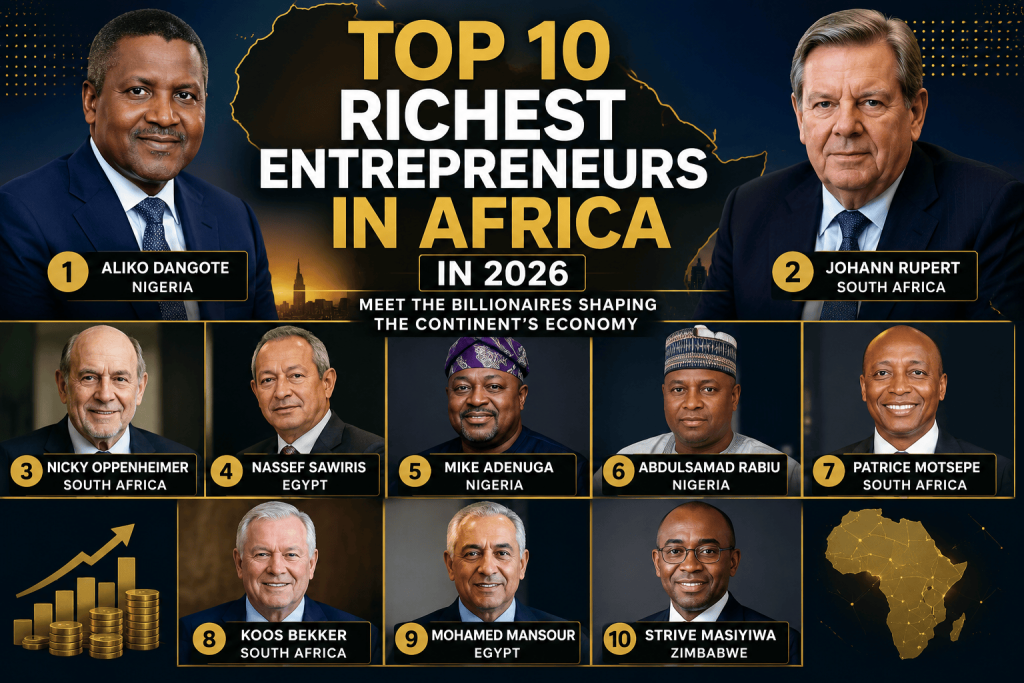
Africa’s economic landscape continues to evolve rapidly, driven by innovation, entrepreneurship, and strategic investments across various industries. At the center of this transformation are a select group of business leaders who have built massive enterprises spanning manufacturing, telecommunications, mining, luxury goods, finance, and technology.
These entrepreneurs have not only accumulated extraordinary wealth but have also created millions of jobs, attracted international investment, and contributed significantly to economic growth across the continent.
As Africa’s population expands and markets become increasingly interconnected, the influence of these business leaders continues to grow. Their stories offer valuable insights into resilience, strategic thinking, and the opportunities available within emerging markets.
Here is a look at the top 10 richest entrepreneurs in Africa in 2026 and how they built their fortunes.
1. Aliko Dangote – Nigeria
When discussing wealth and entrepreneurship in Africa, Aliko Dangote remains the benchmark. The founder of the Dangote Group has built one of the largest industrial conglomerates on the continent.
His business interests include:
- Cement production
- Sugar refining
- Salt processing
- Fertilizer manufacturing
- Oil refining
- Agriculture
Dangote’s strategy has focused on reducing Africa’s dependence on imports by investing heavily in local production.
The success of Dangote Group and the massive scale of the Dangote Refinery have further strengthened his position as Africa’s wealthiest entrepreneur. How Aliko Dangote Built Africa’s Largest Business Empire: The Journey from Trader to Industrial Giant is something worth reading to have a deeper understanding of his business mindset and strategies.
His journey from commodity trader to industrial giant continues to inspire entrepreneurs across the continent.
2. Johann Rupert – South Africa
Johann Rupert is one of Africa’s most influential business figures and the chairman of luxury goods company Compagnie Financière Richemont.
Richemont owns several globally recognized luxury brands, including:
- Cartier
- Montblanc
- Van Cleef & Arpels
- IWC Schaffhausen
Unlike many African billionaires whose fortunes come from natural resources, Rupert built wealth through luxury retail and international brand ownership.
His global business footprint demonstrates how African entrepreneurs can compete successfully in premium international markets.
3. Nicky Oppenheimer – South Africa
Nicky Oppenheimer’s fortune originates largely from the diamond industry.
For decades, the Oppenheimer family controlled a significant stake in De Beers, one of the world’s most famous diamond companies.
Although the family sold its controlling interest years ago, Oppenheimer has continued expanding investments through private equity, conservation initiatives, and various business ventures.
His wealth reflects the enduring importance of Africa’s mining sector in global markets.
4. Nassef Sawiris – Egypt
Nassef Sawiris is one of the most successful industrial investors in Africa.
His wealth stems from interests in:
- Construction
- Engineering
- Fertilizers
- International investments
Sawiris has also acquired stakes in global companies and sports-related ventures, making him one of Africa’s most internationally diversified entrepreneurs.
His success highlights the value of strategic investment beyond domestic markets.
5. Mike Adenuga – Nigeria
Mike Adenuga built his fortune through telecommunications and energy.
He is the founder of Globacom, one of Africa’s largest telecom operators.
Globacom revolutionized mobile communication in Nigeria by introducing competitive pricing and expanding network access.
In addition to telecommunications, Adenuga has substantial interests in oil and gas exploration.
His business success demonstrates the enormous opportunities within Africa’s technology and communications sectors.
6. Abdulsamad Rabiu – Nigeria
Abdulsamad Rabiu has emerged as one of Africa’s most influential industrialists.
Through BUA Group, he has built significant operations in:
- Cement manufacturing
- Sugar refining
- Food processing
- Infrastructure development
Rabiu’s rise illustrates how local manufacturing continues to create enormous wealth while contributing to national economic development.
His investments have positioned BUA Group as one of the strongest competitors in Nigeria’s industrial sector.
7. Patrice Motsepe – South Africa
Patrice Motsepe made history as one of Africa’s first Black billionaires.
He founded African Rainbow Minerals and built a diversified portfolio across:
- Gold mining
- Platinum
- Iron ore
- Coal
- Financial services
Motsepe is widely respected for both his business achievements and philanthropic efforts.
His success story remains one of Africa’s most inspiring examples of entrepreneurship and leadership.
8. Koos Bekker – South Africa
Koos Bekker transformed media and technology investments into extraordinary wealth.
As a key figure behind Naspers, he helped turn a traditional media company into one of the world’s most successful technology investors.
Naspers’ early investment in Tencent became one of the most profitable technology investments in history.
Bekker’s career highlights the importance of identifying emerging technology trends before they become mainstream.
9. Mohamed Mansour – Egypt
Mohamed Mansour leads one of the Middle East and Africa’s largest business groups.
The Mansour Group operates across multiple industries including:
- Automotive distribution
- Retail
- Equipment
- Financial services
Through partnerships with global brands, the company has expanded its reach far beyond Egypt.
Mansour’s success underscores the importance of strategic partnerships and diversification.
10. Strive Masiyiwa – Zimbabwe
Strive Masiyiwa is one of Africa’s most respected technology entrepreneurs.
He founded Econet Wireless and overcame significant regulatory challenges to build a telecommunications empire.
Today, his investments span:
- Telecommunications
- Renewable energy
- Education
- Technology startups
- Financial technology
Masiyiwa is also recognized globally for his philanthropic work and support for young entrepreneurs.
His story demonstrates how persistence and innovation can overcome even the most difficult business obstacles.
Industries Creating Africa’s Billionaires
A review of Africa’s richest entrepreneurs reveals several common themes.
Manufacturing
Companies producing essential goods such as cement, sugar, and fertilizers continue generating significant wealth.
Telecommunications
The rapid growth of mobile connectivity has created major opportunities for entrepreneurs.
Mining and Natural Resources
Africa’s abundance of minerals remains a key source of wealth creation.
Technology Investments
Digital transformation is creating new billionaires and expanding opportunities for innovation.
Infrastructure Development
Growing populations require roads, housing, power, and industrial facilities, driving investment opportunities.
What Entrepreneurs Can Learn from Africa’s Richest Business Leaders
Several lessons emerge from studying these successful entrepreneurs.
Focus on Long-Term Opportunities
Most of these billionaires spent decades building their businesses.
Solve Real Problems
Their companies address essential needs such as communication, housing, transportation, and consumer goods. Any country that wants to thrive must be a producing/manufacturing country. Which is why such countries must give their entreprenuers financial backings and policies that would make their businesses successful. The reason is because their business will contribute to the economic growth of their nations, thereby reducing unemployments. One of the major problems most of African nations are facing in this era.
Think Beyond Borders
Many expanded beyond their home countries to access larger markets. As an entrepreneur, you may need to think beyond borders if you want to run a successful business empire. This may involves you expanding your business beyond your country. Having your business established in neighboring countries help makes your business more stable. When you have your investment in other countries, it gives you a leverage and a means to prevent your company from crashing. When your business is restricted to your country, government policies may have a high negative impacts on your business most especially when there is a change in governance. War and other environmental factors can also have adverse effects.
Invest in Scalable Industries
Industries capable of serving millions of customers often create the greatest opportunities.
Adapt to Change
Technology, consumer behavior, and market conditions evolve constantly. Successful entrepreneurs remain flexible and innovative. It is pertinent to adapt to change. This is one of the greatest mistake of some companies (NOKIA, BlackBerry and so on). They failed to evolve which made Android took over from them. We are now in the era of smartphones, where we now use touch screen phones. We now have to go to Google Play store or IOS store to download apps. So, to thrive in a business, there is need to keep up with the latest technology to adopt mostly especially in the world where artificial intelligence is taking over the gradually.
Africa’s Growing Wealth Creation Potential
Africa is projected to remain one of the world’s fastest-growing regions in terms of population and economic development.
Key drivers include:
- Urbanization
- Digital transformation
- Infrastructure investments
- Expanding consumer markets
- Growing middle-class populations
These trends are expected to create new opportunities for entrepreneurs and investors across the continent.
The next generation of African billionaires may emerge from industries such as artificial intelligence, renewable energy, fintech, healthcare technology, and e-commerce.
Conclusion
The top 10 richest entrepreneurs in Africa in 2026 represent more than financial success. They symbolize innovation, determination, and the immense potential of African enterprise.
From Aliko Dangote’s manufacturing empire and Johann Rupert’s luxury brands to Strive Masiyiwa’s telecommunications success, these business leaders have transformed industries and inspired millions.
Their stories demonstrate that long-term vision, strategic investment, and a commitment to solving real-world challenges can create lasting wealth and economic impact.
As Africa’s economies continue to expand, these entrepreneurs will remain influential figures shaping the continent’s future while inspiring a new generation of business leaders to pursue ambitious goals and build globally competitive enterprises.
2 thoughts on “Top 10 Richest Entrepreneurs in Africa in 2026”