What Is a Digital Wallet? How It Works, Types, Security and the Future of Digital Payments
What Is a Digital Wallet?
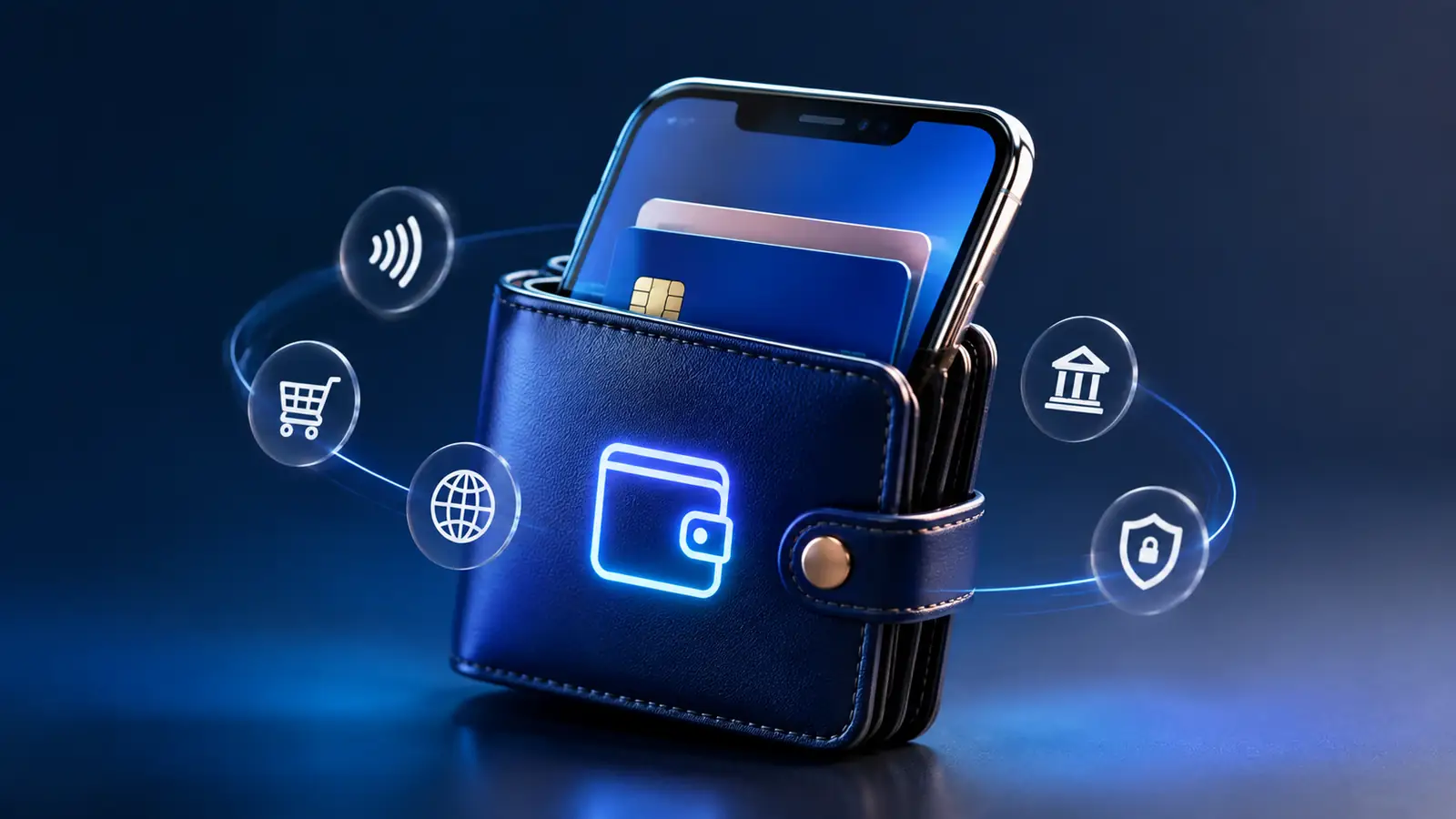
A digital wallet, also known as an e-wallet or mobile wallet, is a software application or digital service that allows users to store, access and use payment credentials, money and other digital items electronically.
Depending on the provider and the country where it operates, a digital wallet can support debit and credit cards, bank accounts, stored balances, loyalty cards, tickets, rewards, digital credentials and, in some cases, cryptocurrency or other digital assets.
Millions of people use digital wallets to buy products online, pay bills, transfer money, purchase tickets, pay merchants, receive funds and manage everyday financial transactions.
Popular examples include:
- Apple Pay
- Google Pay
- PayPal
- Alipay
- WeChat Pay
- Cash App
- Venmo
- OPay
- PalmPay
- M-Pesa
Digital wallets have moved far beyond simply storing card details.
According to Worldpay’s 2026 Global Payments Report, digital wallets accounted for 56% of global e-commerce transaction value and 33% of in-person spending in 2025.
That makes digital wallets one of the most important components of the modern payments ecosystem.
The technology is particularly important because wallets can connect several payment methods and financial services through a single digital interface.
In this premium Frenovara feature, we explore what a digital wallet is, explain how digital wallets work, examine their different types, explore the technologies that power them, look at their security systems, examine how wallet companies make money, and explore the future of digital payments.
PART 1: What Is a Digital Wallet and How Does It Work?
What Is a Digital Wallet?
A digital wallet is an electronic platform that allows users to access payment methods and other digital financial services through a smartphone, computer, tablet or wearable device.
Instead of carrying cash or repeatedly entering card details during online purchases, users can authenticate themselves and complete transactions through the wallet.
Depending on the service, a digital wallet may provide access to:
- Debit cards
- Credit cards
- Bank accounts
- Stored balances
- Gift cards
- Loyalty cards
- Digital tickets
- Rewards
- Digital credentials
- Cryptocurrency or other digital assets
The exact features vary from one provider to another.
Some wallets primarily provide access to existing cards, while others function more like financial platforms with stored balances, transfers, savings, credit, merchant services and other products.
This distinction is important because the term digital wallet now covers a much broader category of financial technology than it did when mobile payments first emerged.
How Digital Wallets Work
Understanding how digital wallets work helps explain why they have become so important to modern commerce.
The process generally involves several stages.
Step 1: Add Payment Information
Users connect a payment method to their wallet.
This could be:
- A debit card
- A credit card
- A bank account
- A stored balance
- A supported payment service
In some wallets, users can also receive money directly into their wallet balance.
Step 2: Secure Authentication
Digital wallets normally require authentication before sensitive information or transactions can be accessed.
Depending on the provider and device, this may include:
- Passwords
- PIN codes
- Fingerprint authentication
- Facial recognition
- Device authentication
- Multi-factor authentication
Modern smartphones have made biometric authentication particularly convenient because users can approve transactions without manually entering long passwords.
Step 3: Make a Payment
Users can make payments through different channels.
These include:
- Contactless payments using NFC
- QR codes
- Online checkout systems
- In-app purchases
- Payment links
- Bank transfers
- Merchant applications
For example, a customer buying something in a physical store may tap a smartphone or smartwatch against a compatible payment terminal.
An online shopper may select a digital wallet at checkout and authenticate the transaction without manually entering card details.
Step 4: Transaction Processing
Behind the simple interface is a much larger payment infrastructure.
Depending on the transaction, the wallet may interact with:
- Banks
- Card networks
- Payment processors
- Merchant acquirers
- Payment gateways
- Mobile-money operators
- Other financial institutions
The relevant parties authenticate and process the transaction before the merchant receives confirmation.
What appears to the customer as a simple tap or click can therefore involve multiple systems working together in seconds.
Types of Digital Wallets
Not all digital wallets operate in exactly the same way.
They can broadly be classified according to where and how users can spend or transfer their funds.
Closed Wallets
Closed wallets are designed primarily for use within a particular company or platform.
They may allow customers to store value or payment credentials for transactions connected to that ecosystem.
Examples can include:
- Retail store wallets
- Ride-hailing app wallets
- Gaming wallets
- Platform-specific payment balances
Their usefulness is closely connected to the ecosystem that operates the wallet.
Semi-Closed Wallets
Semi-closed wallets can generally be used across a network of participating merchants or services rather than being restricted to one company.
This model is common in mobile-money and fintech ecosystems.
Examples in Nigeria include:
The Central Bank of Nigeria lists OPay Digital Services Limited and PalmPay Limited among licensed mobile-money operators.
The precise services available depend on the provider, licence category, regulations and payment infrastructure in each market.
Open Wallets
Open wallet systems generally support broader payment functionality and may allow users to make payments or transfers across wider payment networks.
Examples include services such as:
However, wallet classifications can differ between jurisdictions.
A wallet may also operate differently depending on whether it is being used for card payments, bank transfers, stored value, merchant payments or other financial services.
Technologies Behind Digital Wallets
Several technologies work together to make modern digital wallets possible.
Near Field Communication (NFC)
NFC allows compatible devices to communicate over short distances.
It is commonly used for contactless payments.
A customer can bring a smartphone or smartwatch close to a payment terminal and authenticate the transaction.
QR Codes
QR codes provide another way to initiate digital payments.
A customer may scan a merchant’s QR code, while some systems allow merchants to scan a customer’s payment code.
QR payments are particularly important in markets where smartphone-based payments are expanding rapidly.
Tokenization
Tokenization is one of the most important security technologies associated with modern digital payments.
Instead of repeatedly exposing the underlying payment credential, a payment system can use a token that represents the relevant information.
This can reduce the exposure of sensitive payment data during transactions.
Tokenization is also becoming an important area of development across the broader financial system, including payments and financial transactions.
Encryption
Encryption protects sensitive information by transforming it into a form that is difficult for unauthorized parties to understand.
Digital payment systems use encryption and other security technologies to protect information during transmission and storage.
Cloud Computing
Cloud infrastructure can help digital financial platforms synchronize services, process large volumes of transactions and support users across different devices.
The architecture varies by provider, but cloud technology has become an important part of modern financial technology infrastructure.
Why Millions of People Use Digital Wallets
Digital wallets have become popular because they solve several everyday problems.
Convenience
Users can access payment methods from a smartphone instead of carrying multiple cards or cash.
Speed
Digital payments can often be completed in seconds.
Security
Authentication, tokenization, encryption and device-level security can provide multiple layers of protection.
Financial Inclusion
Mobile financial services can provide access to payments and other financial products for people who may have limited access to traditional banking infrastructure.
Better Online Shopping
Digital wallets can reduce the amount of information customers need to manually enter during checkout.
These advantages have helped digital wallets become a major part of modern commerce.
Digital Wallets and Online Shopping
The growth of e-commerce has accelerated the adoption of digital wallets.
Worldpay’s latest global payments research shows that digital wallets accounted for more than half of global e-commerce transaction value in 2025.
For online retailers, wallet payments can provide:
- Faster checkout
- Easier authentication
- Reduced payment friction
- Greater payment choice
- Improved customer convenience
- Potentially fewer abandoned transactions
The wallet is therefore becoming more than a payment option.
It is increasingly part of the overall customer experience.
Digital Wallets Are Becoming the New Payment Interface
One of the most important changes in digital payments is that the wallet increasingly acts as an interface connecting several financial instruments.
A single wallet can potentially provide access to:
- Cards
- Bank accounts
- Buy now, pay later services
- Stored balances
- Rewards
- Loyalty programmes
- Transfers
- Merchant payments
This is one reason digital wallets have remained relevant even in markets where traditional cards are still widely used.
The wallet does not always replace the underlying payment method.
Instead, it can provide a simpler way to access it.
Digital Wallets in Africa
Africa has become an important market for mobile payments and digital financial services.
The continent’s payment ecosystem includes banks, mobile-money operators, fintech companies, payment processors and technology platforms.
Companies such as:
- OPay
- PalmPay
- M-Pesa
- Flutterwave
- Chipper Cash
have helped expand access to digital financial services.
Digital wallets and mobile-money platforms can help users:
- Receive payments
- Pay bills
- Buy products
- Transfer money
- Receive funds
- Access financial services
- Make merchant payments
Nigeria’s Digital Payment Revolution
Nigeria provides one of the clearest examples of how mobile technology is transforming payments.
According to Central Bank of Nigeria data covering January to June 2024, mobile-app transfers recorded about 3.49 billion transactions worth ₦159.4 trillion, while mobile-money operators recorded more than 7.18 billion transactions worth about ₦78.2 trillion.
The CBN’s data also showed more than 6.39 billion POS transactions worth about ₦85.9 trillion during the same period.
These numbers demonstrate the scale of Nigeria’s transition toward electronic payments.
The country’s digital-payment ecosystem is therefore not simply a technology trend.
It is becoming a major part of everyday economic activity.
PART 2: How Digital Wallet Companies Make Money and Protect Your Money
How Digital Wallet Companies Make Money
Many people use digital wallets without paying a traditional monthly subscription.
This raises an obvious question:
How do digital wallet companies make money?
The answer is that wallet providers can operate multiple revenue streams simultaneously.
These can include:
- Payment processing fees
- Merchant service charges
- Foreign-exchange fees
- Financial products
- Business software
- Advertising partnerships
- Interest-related income where permitted
- Premium subscriptions
- Cross-border payment services
The exact business model differs significantly between providers.
Payment Processing Is the Core Business Model
Every digital payment can involve several participants.
When a customer uses a wallet to purchase a product, the payment may move through a combination of:
- The wallet provider
- A bank
- A card network
- A payment processor
- A merchant acquirer
- The merchant
Depending on the structure, the wallet provider may earn revenue through payment processing or other services.
The individual revenue generated from a transaction can be small.
At massive transaction volumes, however, these small amounts can become a substantial business.
Card Payments
Wallet providers can enable customers to use debit and credit cards through a digital interface.
This makes payment more convenient while allowing the underlying card infrastructure to continue processing the transaction.
Bank Transfers
Some wallets allow users to move money directly between accounts.
In markets where account-to-account payments are strong, this can become an important part of the wallet ecosystem.
Why Africa’s Digital Banks Are Winning the Future of Finance
QR Code Payments
QR-based payments allow customers and merchants to initiate transactions without physically exchanging cash or cards.
This can be particularly useful for small businesses and informal merchants.
Contactless Payments
Near Field Communication enables tap-to-pay transactions through compatible smartphones and smartwatches.
This technology has helped make mobile payments increasingly convenient in physical stores.
Merchant Services Create Additional Revenue
Digital wallet companies increasingly provide businesses with services beyond consumer payments.
These can include:
Payment Gateways
Businesses integrate secure payment processing into websites and mobile applications.
This allows customers to complete purchases using their preferred payment methods.
Business Dashboards
Merchants can use dashboards to monitor:
- Sales
- Payments
- Transaction histories
- Refunds
- Customer activity
How Fintech Is Powering Online Shopping
Financial Analytics
Payment data can help businesses understand purchasing patterns and make better commercial decisions.
Subscription Solutions
Recurring payment infrastructure allows businesses to charge customers periodically for:
- Software
- Memberships
- Streaming
- Digital services
- Subscriptions
Merchant services can therefore become an important source of recurring revenue for fintech companies.
Foreign Exchange and Cross-Border Payments
International transactions provide another potential revenue opportunity.
Wallet providers may earn fees or spreads when users:
- Convert currencies
- Send money internationally
- Receive cross-border payments
- Pay merchants in another currency
As international commerce expands, cross-border payments are becoming an increasingly important part of fintech competition.
Financial Products Expand the Wallet Business
Some digital wallet providers have expanded beyond payments into broader financial services.
Depending on licensing and local regulation, these can include:
- Savings
- Credit
- Loans
- Investments
- Insurance
- Wealth-management products
This creates an important shift.
The wallet can become the entry point through which customers access multiple financial products.
Artificial Intelligence Makes Digital Wallets Smarter
Artificial intelligence and machine learning are increasingly being applied across payment ecosystems.
How African SMEs Are Using AI to Compete with Global Businesses
Applications include:
Fraud Detection
Machine-learning systems can identify unusual transaction patterns and flag potentially suspicious activity.
Risk Analysis
AI can help payment companies assess transaction risk before approving or declining certain transactions.
Personalized Recommendations
Wallet platforms can use transaction data to provide personalized offers, rewards or financial insights where appropriate and permitted.
Customer Support
AI-powered assistants can help answer routine questions relating to:
- Transactions
- Account activity
- Payments
- Refunds
- Security
AI is therefore becoming part of the infrastructure behind the digital-payment experience rather than simply a marketing feature.
How Digital Wallets Protect Your Money
Security remains one of the most important issues in digital payments.
A convenient wallet is only useful if consumers trust it.
Modern payment systems therefore use several layers of protection.
Tokenization
Tokenization can replace sensitive payment credentials with payment tokens.
This reduces the need to expose the underlying card information during every transaction.
Encryption
Encryption protects sensitive information while it is transmitted between systems.
Biometric Authentication
Modern devices can use:
- Fingerprints
- Facial recognition
- Other device-supported biometric systems
to verify users.
Multi-Factor Authentication
Additional authentication factors can provide another layer of protection against unauthorized access.
Device Security
Digital wallets can also depend on security features built into the user’s device.
This means the security of a wallet transaction is often a combination of:
- Wallet security
- Device security
- Payment-network security
- Bank security
- User behaviour
Consumers therefore still need to protect their devices and authentication credentials.
Why Businesses Prefer Digital Wallet Payments
Businesses increasingly offer digital wallets because customers expect convenient payment experiences.
AI and Online Shopping in Africa
Key advantages include:
Faster Checkout
Customers can complete purchases with fewer manual steps.
Potentially Higher Conversion
Reducing payment friction can make it easier for customers to complete purchases.
Faster Payment Collection
Digital payments can give businesses quicker access to transaction proceeds, depending on the payment system.
Lower Cash-Handling Costs
Electronic transactions reduce the need to physically handle, transport and reconcile cash.
Better Customer Experience
Convenient payment options can encourage repeat purchases.
Digital Wallets Are Driving Financial Inclusion
One of the most important benefits of digital wallets and mobile-money systems is their potential to expand access to financial services.
The Future of E-commerce in Africa
Depending on the provider and regulatory framework, users can:
- Store money digitally
- Receive payments
- Pay utility bills
- Send money
- Shop online
- Access credit products
- Build transaction histories
- Receive business payments
This is particularly important in developing economies where mobile technology can reach communities that have historically had limited access to conventional banking services.
Industries Benefiting from Digital Wallets
Digital wallets have expanded far beyond retail.
Today, digital payments support industries such as:
E-commerce
Online stores use digital payment systems to process purchases.
Transportation
Passengers can pay for tickets, rides and transportation services electronically.
Entertainment
Streaming subscriptions, gaming purchases and digital content can be paid for through wallets.
Healthcare
Patients can make medical payments electronically where supported.
Education
Students and parents can pay tuition, fees and digital learning services through electronic payment systems.
Hospitality
Hotels, restaurants and travel companies increasingly accept digital payments.
The growing number of use cases demonstrates how deeply digital wallets are becoming integrated into the wider economy.
Challenges Facing Digital Wallet Providers
Despite their rapid growth, digital wallets face major challenges.
Cybersecurity
Payment providers remain targets for fraud, account takeover, phishing and other cyber threats.
Regulatory Compliance
Payment regulations vary across countries.
Providers must comply with requirements covering areas such as:
- Licensing
- Consumer protection
- Identity verification
- Anti-money-laundering controls
- Data protection
- Payment security
Consumer Trust
A major security incident can damage a provider’s reputation.
Trust is therefore one of the most valuable assets in financial technology.
Competition
Digital wallet providers compete with:
- Banks
- Fintech companies
- Technology companies
- Payment processors
- Retailers
- Mobile-money operators
Competition continues pushing companies to improve their products.
PART 3: The Future of Digital Wallets
The Future of Digital Wallets
Digital wallets are evolving beyond simple payment applications.
The next generation of wallets is likely to combine payments with broader financial and commercial services.
Potential areas of development include:
- Artificial intelligence
- Embedded finance
- Open banking
- Digital identity
- Real-time payments
- Cross-border payments
- Tokenized financial assets
- Biometric authentication
- Personalized financial management
The most successful wallets will likely be those that combine convenience with trust, security and a broad ecosystem of services.
Artificial Intelligence Will Personalize Financial Services
AI is likely to play a growing role in the future of digital wallets.
Future applications may include:
- Personalized spending insights
- Automated budgeting
- Smart savings recommendations
- Real-time fraud detection
- Customized financial products
- Predictive cash-flow analysis
- Automated financial assistance
Instead of simply processing a payment, a wallet could increasingly help users understand and manage their financial activity.
However, the use of AI in finance will also require careful attention to privacy, transparency, security and responsible data use.
Biometric Authentication Will Continue Evolving
Biometric authentication can make digital payments faster while reducing dependence on passwords.
Future systems may increasingly combine:
- Facial recognition
- Fingerprint authentication
- Voice recognition
- Device-based authentication
- Behavioural signals
Behavioural systems could examine patterns such as device usage and interaction behaviour to identify suspicious activity.
The goal is not simply to make authentication easier.
It is to make it both more secure and less intrusive.
Digital Wallets Will Power the Cashless Economy
Governments, businesses and consumers are increasingly adopting electronic payments.
Digital wallets can support this transition through:
Contactless Payments
Customers can pay by tapping a smartphone or smartwatch.
QR Code Transactions
QR payments can support retail, transportation, restaurants and small businesses.
Online Shopping
Wallets can simplify checkout across e-commerce platforms.
Government Services
Digital payment infrastructure can support taxes, utility bills, licences and other government-related payments where such systems are implemented.
The future of cashless commerce will therefore depend not only on wallets but on the wider infrastructure connecting banks, payment networks, merchants, governments and consumers.
Cross-Border Payments Will Become More Important
International commerce creates a major opportunity for digital wallets.
Future wallet systems may increasingly support:
Multi-Currency Transactions
Users may hold or access multiple currencies through a single interface.
Faster Global Transfers
Advances in payment infrastructure can reduce settlement times.
Lower Transfer Costs
Competition and new payment technologies could place downward pressure on transfer costs.
Global Commerce
Small businesses can potentially reach customers in other countries more easily when payment barriers are reduced.
The challenge will be ensuring that speed and convenience are matched by strong compliance, security and consumer protection.
Embedded Finance Will Expand the Role of Wallets
One of the biggest developments in fintech is the integration of financial services directly into non-financial platforms.
Instead of visiting a bank separately, consumers may increasingly access financial services inside:
- Shopping applications
- Transportation platforms
- Social platforms
- Business software
- Travel applications
- Marketplaces
Digital wallets are well positioned to participate in this shift because they already sit between consumers, merchants and financial infrastructure.
Open Banking Could Make Wallets More Connected
Open-banking systems can allow customers to securely connect financial accounts to third-party applications where supported by local regulation and infrastructure.
This could allow digital wallets to provide more personalized services without requiring users to maintain completely separate financial ecosystems.
Open banking may therefore make wallets more useful as financial-management platforms.
Tokenization Could Transform Digital Finance
Tokenization is moving beyond payment credentials.
Financial institutions and central banks are exploring how tokenized forms of money and financial assets could improve settlement and cross-border transactions.
The Bank for International Settlements has highlighted tokenization as an important development for the future of financial infrastructure.
This could eventually affect:
- Cross-border payments
- Securities settlement
- Digital financial assets
- Commercial bank money
- Central-bank money
- Financial-market infrastructure
The long-term implications could be much larger than mobile payments alone.
Digital Wallets and the Future of Financial Identity
The future wallet may also become increasingly connected to digital identity.
Instead of simply proving that a user owns a payment card, future digital financial platforms could potentially help users authenticate identity, access services and authorize transactions through a trusted digital environment.
However, digital identity introduces important questions around:
- Privacy
- Data ownership
- Government regulation
- Cybersecurity
- Interoperability
- Consumer consent
For digital wallets to become trusted identity platforms, security and privacy will need to develop alongside convenience.
How Businesses Can Benefit from Digital Wallets
Companies of all sizes can use digital wallets to improve the customer experience.
Higher Conversion Rates
Faster payment processes can reduce friction at checkout.
Increased Customer Loyalty
Convenient payment options can encourage repeat purchases.
Improved Cash Flow
Electronic payment systems can streamline collection and reconciliation.
Lower Operating Costs
Digital transactions can reduce some cash-handling and administrative costs.
Better Customer Insights
Payment data, when collected and used lawfully, can help businesses understand purchasing behaviour and improve their commercial strategies.
For many businesses, accepting customers’ preferred digital payment methods is increasingly becoming a basic requirement rather than a luxury.
Investment Opportunities in Digital Wallet Technology
The growth of digital payments continues to attract investment across multiple areas.
Important areas include:
- Artificial intelligence
- Embedded finance
- Open banking
- Mobile payment infrastructure
- Cross-border payments
- Cybersecurity
- Merchant payment platforms
- Digital identity
- Financial inclusion
- Tokenization
Investors are therefore not simply investing in wallet applications.
They are investing in the infrastructure surrounding the future of digital commerce.
Challenges That Could Shape the Future
The future of digital wallets will not be without obstacles.
Cybersecurity Threats
As transaction volumes increase, attackers will continue targeting payment systems.
Regulatory Changes
New rules will continue shaping how digital financial services operate.
Digital Literacy
Consumers need to understand how to protect their accounts, devices and authentication credentials.
Interoperability
Different payment systems need to communicate effectively if global commerce is to become more seamless.
Consumer Privacy
The growing use of transaction data and artificial intelligence makes privacy increasingly important.
Competition
Banks, fintech companies, technology firms and payment platforms will continue competing for control of the customer relationship.
Companies that combine innovation with reliability and trust will be better positioned for long-term success.
Lessons Entrepreneurs Can Learn from Digital Wallets
The rise of digital wallets offers valuable lessons for entrepreneurs.
Solve Everyday Problems
Successful fintech products remove friction from activities people perform frequently.
Prioritize User Experience
A product can be technically sophisticated but still fail if customers find it difficult to use.
Invest in Security
Trust is fundamental to financial technology.
Build Strong Partnerships
Fintech companies depend on banks, merchants, payment networks, regulators and technology providers.
Embrace Innovation
AI, automation, tokenization and new payment infrastructure will continue changing the industry.
Build for Multiple Revenue Streams
The strongest fintech businesses often combine transaction revenue with merchant services, financial products, subscriptions or other income sources.
These lessons extend beyond fintech.
They apply to entrepreneurs building businesses in almost every industry.
Digital Wallets in Nigeria: What the Future Could Look Like
Nigeria is likely to remain an important market for digital financial services.
The country’s large population, smartphone adoption, fintech ecosystem and extensive payment infrastructure create significant opportunities.
The CBN’s payment ecosystem already includes licensed mobile-money operators such as OPay and PalmPay, alongside banks, payment processors and other regulated participants.
At the same time, regulation is becoming more sophisticated.
The CBN has introduced measures involving payment-system modernization, including migration toward the ISO 20022 messaging standard and geographical identification requirements for payment terminals.
These developments demonstrate that the future of Nigerian digital payments will not be determined by technology alone.
It will also depend on:
- Regulation
- Security
- Consumer trust
- Interoperability
- Infrastructure
- Financial inclusion
- Responsible innovation
Nigeria’s experience could become an important case study in how emerging markets build large-scale digital payment ecosystems.
Final Thoughts
The answer to “What Is a Digital Wallet?” extends far beyond storing payment information on a smartphone.
Digital wallets have evolved into powerful financial interfaces connecting consumers, merchants, banks, payment networks and increasingly sophisticated digital services.
They support payments, online shopping, money transfers, merchant services and financial inclusion.
Their growth is being driven by convenience, smartphone adoption, e-commerce, mobile money, contactless payments and the increasing demand for faster digital transactions.
At the same time, the technology behind wallets is becoming more sophisticated.
Tokenization, encryption, biometric authentication, artificial intelligence, open banking, embedded finance and real-time payment infrastructure are reshaping what a digital wallet can do.
For businesses, digital wallets can create faster and more convenient payment experiences.
For consumers, they can make everyday transactions easier.
For fintech companies, they represent a platform through which multiple financial services can be delivered.
And for entrepreneurs and investors, the wallet is only one part of a much larger opportunity surrounding the future of digital commerce.
As the global payments industry continues evolving, digital wallets are moving from being simple payment tools toward becoming broader financial and commercial ecosystems.
The future will belong to companies that can combine innovation, security, convenience and trust.
And as Africa’s digital economy continues developing, Nigeria and other emerging markets will play an increasingly important role in shaping that future.
Digital wallets are therefore not simply changing how people pay.
They are changing how people interact with money.
What’s your take on this? Kindly let us know in the comments section.